Christmas Kids Crafts Crafts
Fun, easy projects that kids of all ages can enjoy.
Crafting with kids is about the process, not perfection. The glitter everywhere, the crooked gluing, the creative "interpretations" — that's where the magic happens.
Why Kids Christmas Crafts Matter
Kids crafts build fine motor skills, encourage creativity, and create memories that last longer than any store-bought decoration. Handmade gifts from children are treasured by grandparents, teachers, and neighbors for years.
Developmental Benefits of Crafting
- Cutting with scissors — builds hand strength and coordination
- Gluing — develops fine motor control
- Following instructions — builds sequencing skills
- Decorating — encourages creative thinking
- Completing projects — builds confidence and self-efficacy
Age-Appropriate Christmas Crafts
A frustrated child is not a crafting child. Match projects to abilities:
- Toddlers — Large shapes, chunky crayons, big stickers
- Preschoolers — Scissors with supervision, sensory materials like cotton balls
- Elementary — Multi-step instructions, more complex projects
- Tweens — "Cool" projects they won't roll their eyes at
Hidden Learning Opportunities
Christmas crafts create natural teaching moments:
- Counting ornament pieces = math practice
- Mixing paint colors = color theory
- Following patterns = literacy skills
- Making gifts for others = empathy and generosity
Budget-Friendly Craft Supplies
The best kids crafts don't require expensive materials. Raid your recycling bin:
- Cardboard tubes and egg cartons
- Paper bags and newspaper
- Bottle caps and fabric scraps
- That toilet paper roll reindeer? Free (minus tape and googly eyes)
Embrace the Chaos
Glitter will migrate everywhere. Glue will end up in hair. Paint will drip where it shouldn't. That's creation happening.
The goal is JOY, not perfection. The wonky snowman is perfect. The ornament with too much glitter is perfect. These imperfect creations carry more love than anything from a store.
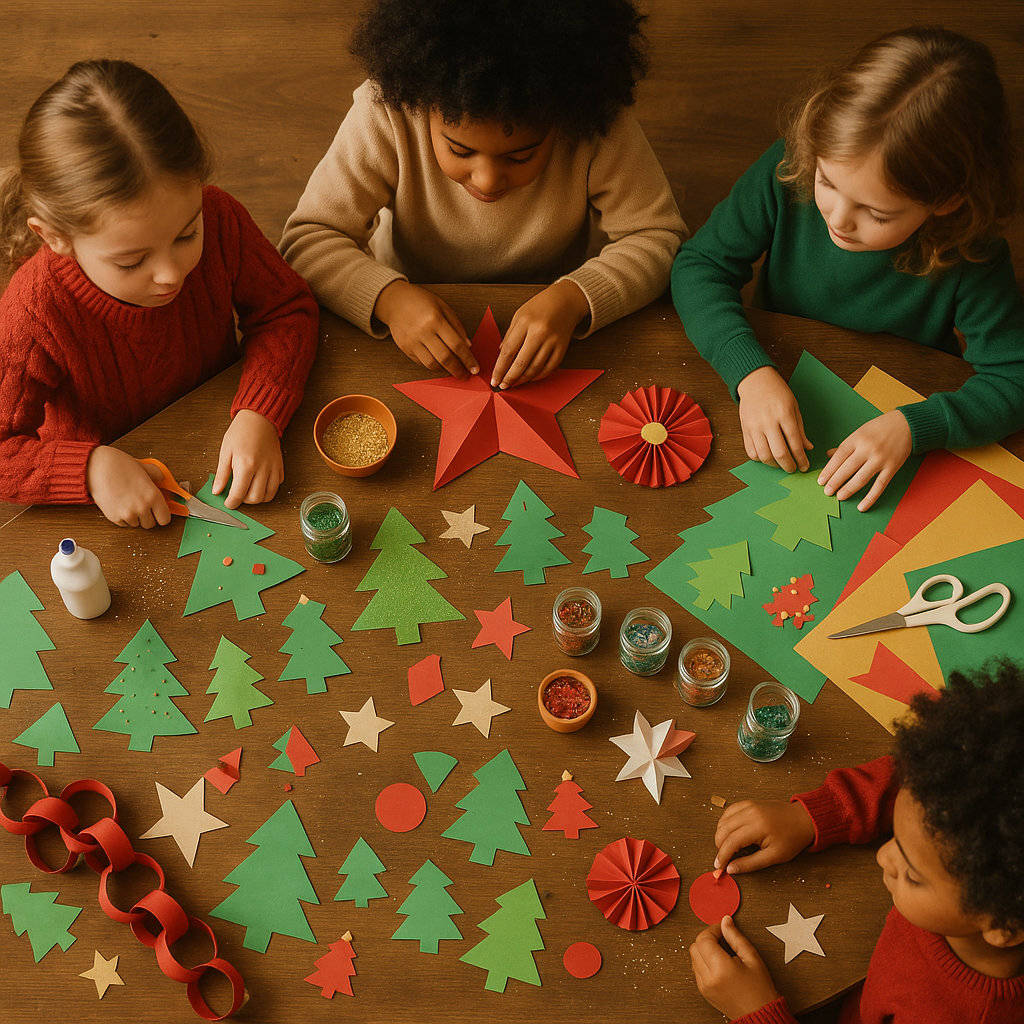
Tips for Kids Crafts Success
Prep Everything First
Pre-cut shapes and organize supplies before kids sit down. Shorter attention spans mean ready-to-go materials are essential. Having everything within reach prevents frustrating interruptions. A few minutes of adult prep saves thirty minutes of kid meltdowns.
Protect Surfaces (and Clothes)
Newspaper, plastic tablecloths, or old sheets save cleanup time. Put kids in old clothes or art smocks. Assume glitter, glue, and paint will escape their intended boundaries. Prevention is easier than scrubbing dried glue off the dining table.
Let Go of Perfection
The goal is fun and creativity, not Pinterest-perfect results. Embrace the wonky snowman with three arms. Celebrate the ornament with ALL the stickers. Your job is to facilitate, not art direct. Their "wrong" choices are actually creative expression.
Make It Wearable
Crafts kids can wear or use immediately get bonus engagement. Jingle bell bracelets, paper crowns, reindeer antler headbands — wearables let kids show off their creations instantly. The immediate gratification keeps interest high.
Use a Timer for Drying
Waiting for glue or paint to dry tests every child patience reserves. Set a visible timer and redirect to another activity. "When the timer beeps, your ornament will be dry!" frames waiting as anticipation rather than frustration.
Have a Drying Station
Designate a cookie sheet, tray, or counter space specifically for drying crafts. Wet projects that get moved too soon result in tears. Clearly marked drying zones prevent accidental smudging and teach patience about the creative process.
Adapt for Multiple Ages
When siblings or groups have varying abilities, have simpler versions ready. Older kids can add details while younger ones work on basics. Everyone completes something, no one feels left behind, and older kids get leadership practice.
Create Assembly Lines
For group crafting or multiple projects, set up stations. Station one: apply glue. Station two: add glitter. Station three: attach ribbon. Kids rotate through, staying engaged without overwhelming any single step. This also teaches teamwork and patience.
Use Templates
Printed or traced templates help kids who get frustrated with drawing. Having shapes pre-drawn lets them focus on decorating rather than struggling with proportions. Templates provide structure while still allowing creative decoration choices.
Keep Expectations Age-Appropriate
A two-year-old can crumple tissue paper and stick it to glue. A five-year-old can cut simple shapes with supervision. An eight-year-old can follow multi-step instructions. Know your child developmental stage and choose projects that challenge without overwhelming.
Build in Choice
Let kids pick colors, select stickers, and make creative decisions. Autonomy increases engagement. "Do you want a red ribbon or a green ribbon?" is more effective than "Put on the red ribbon." Ownership of choices increases pride in results.
Document the Process
Take photos during crafting, not just of finished products. The concentration face, the glitter-covered hands, the proud holding-up moment — these images capture the real magic. Photos become treasured memories even when the craft itself eventually falls apart.
Common Materials You'll Need
- ✓ Construction paper in all colors (bulk packs are most economical)
- ✓ Kid-safe scissors with blunt tips
- ✓ Washable markers and crayons
- ✓ Glue sticks (many, they disappear fast)
- ✓ School glue in squeeze bottles
- ✓ Pom poms in various sizes and colors
- ✓ Pipe cleaners (chenille stems)
- ✓ Googly eyes in multiple sizes
- ✓ Stickers — seasonal and general
- ✓ Paper plates (sturdy white ones work best)
- ✓ Cotton balls
- ✓ Glitter — fine and chunky varieties (use with brave acceptance of mess)
- ✓ Glitter glue for contained sparkle
- ✓ Foam sheets and foam stickers
- ✓ Craft sticks (popsicle sticks)
- ✓ Tissue paper for crumpling and layering
- ✓ Ribbon scraps and yarn
- ✓ Hole punch for threading projects
- ✓ Tape — clear, masking, and washi
- ✓ Cardboard tubes from toilet paper and paper towels
- ✓ Paint — tempera and watercolor
- ✓ Paintbrushes in various sizes
- ✓ Sequins and buttons for decoration
- ✓ Newspaper or butcher paper for surface protection
Kids Crafts Projects
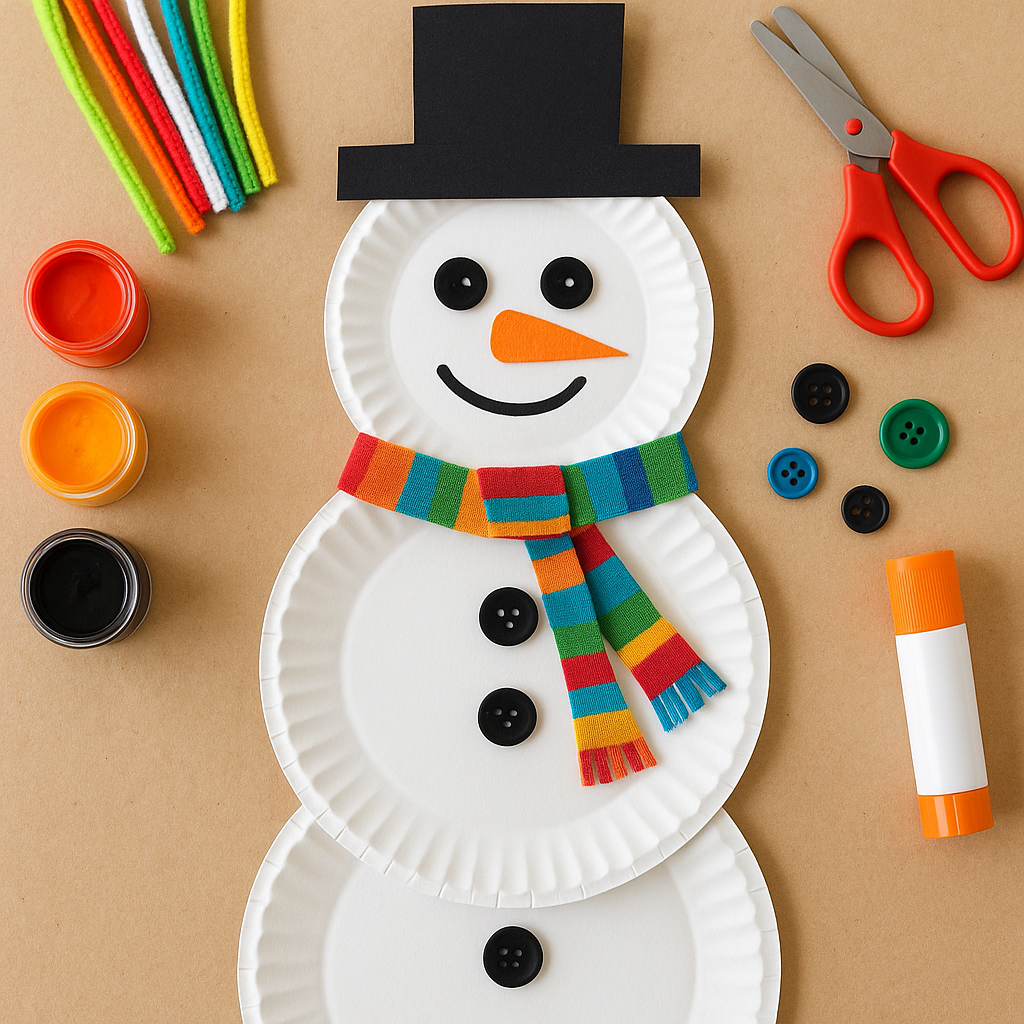
Paper Plate Snowman
Build an adorable snowman from paper plates with this quick and easy craft that is perfect for toddlers and preschoolers. No snow required for this cheerful winter friend.
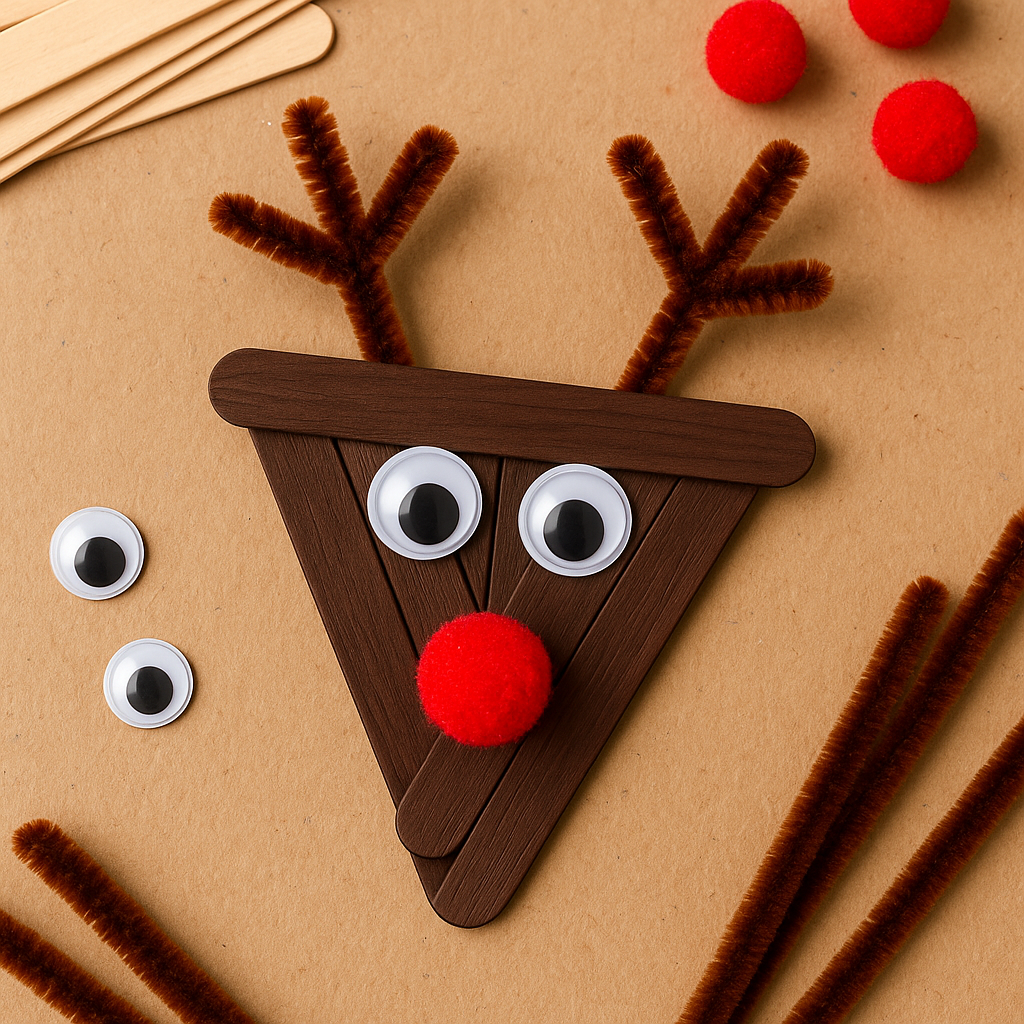
Popsicle Stick Reindeer
Craft a cute Rudolph the Red-Nosed Reindeer from popsicle sticks and a few simple supplies. This quick project makes a great ornament, gift tag, or holiday party activity for young crafters.
Why Make Your Own Kids Crafts?
Crafting with kids creates core memories that outlast any purchased toy. Years from now, they will remember the afternoon you made paper snowflakes together more than they remember any gift they unwrapped. These projects give kids a sense of accomplishment and ownership — "I made this!" is a wonderful feeling at any age, and it is especially powerful for children still learning what they are capable of creating. Think about your own childhood holiday memories. Chances are, at least a few involve making something — construction paper chains, salt dough ornaments, handprint art now yellowed with age but still treasured by your parents. These sensory, hands-on experiences imprint differently than passive consumption. Your child brain was fully engaged: touching materials, making decisions, problem-solving when glue wouldn't stick or scissors wouldn't cut. That engagement creates lasting neural pathways. Translation: crafting memories stick. Kids crafts also provide a desperately needed break from screens during a season dominated by them. Holiday movies, video games, tablet time — screens multiply in December. Crafting offers an analog alternative that captures attention just as effectively. The novelty of different materials, the tactile satisfaction of creating, the autonomy of making choices — these compete successfully with digital entertainment. A well-timed craft project can shift an entire afternoon mood. The gifts children make become treasures to recipients in ways purchased items rarely do. That paper plate wreath, that painted rock, that handprint ornament — grandparents display these gifts for decades. Teachers keep the heartfelt cards. Parents save the crayon drawings long after children have grown. A child discovering that their creation brought someone joy? That is a lesson in generosity and connection that no amount of lecturing can teach. Crafting time is also relationship time. Something about keeping hands busy opens up conversation. Kids share things during craft sessions that they would never say at the dinner table. Maybe it is the side-by-side positioning (less intimidating than face-to-face). Maybe it is the focused distraction that loosens tongues. Whatever the psychology, crafting together builds connection. You are not just making ornaments; you are building relationship. For children who struggle in school or feel "not good at" traditional academics, crafts provide a different arena for success. The kid who cannot sit still through math class might focus intently on decorating an ornament. The one who feels behind in reading might excel at visual, spatial craft tasks. Christmas crafts give every child a chance to succeed at something — and to see that success reflected in parents' and grandparents' pride. The confidence boost matters more than adults often realize. When a child completes a craft — even a simple one — and receives genuine praise, their sense of capability grows. "I made this myself!" carries real psychological weight. That confidence transfers to other areas. Kids who believe they can create and succeed approach new challenges with more optimism. Budget-wise, kids crafts are among the most cost-effective activities available. Construction paper, glue, and basic supplies cost pennies per project. Many of the best crafts use recycled materials — cardboard tubes, egg cartons, newspaper — that were headed for the trash anyway. Compare the cost per hour of engaged kid time: crafting beats almost any purchased entertainment or activity. For overwhelmed parents juggling December demands, kids crafts provide structured activity that keeps children happily occupied while producing gifts, decorations, or both. A well-planned craft session buys you time to mentally plan dinner, respond to work emails, or simply breathe. Busy hands mean fewer demands for your immediate attention. Strategic crafting is a sanity-preservation tool. The sensory benefits of crafting are well-documented but worth emphasizing. Cutting, gluing, crumpling, stamping, painting — each activity develops different fine motor skills. The textures of various materials (smooth paper, fuzzy pom poms, sticky glue, rough glitter) build sensory awareness. For sensory-seeking kids, crafts provide appropriate input. For sensory-sensitive kids, crafts can be adapted with comfortable materials. Crafts also teach patience and delayed gratification in small, manageable doses. Waiting for glue to dry teaches that good results sometimes require waiting. Multi-step projects show that complex outcomes emerge from sequential work. These lessons — so critical in our instant-gratification world — sneak in through the fun of making things. Finally, the chaos of kids crafts is a feature, not a bug. The glitter that migrates everywhere, the glue dripping off tables, the marker caps that vanish into another dimension — this mess represents learning in action. A perfectly clean craft area means no one took risks or tried anything new. Embrace the mess, protect your surfaces, and remember that cleanup time can be a lesson too. When your now-grown child pulls a crumpled, glitter-shedding ornament from a box someday, they will not see imperfection. They will see love, time, attention, and the magic of childhood Christmases spent creating with people who cared enough to sit down, hand them scissors and glue, and say, "Let's make something together."
Explore More Christmas Crafts
Find more DIY projects to make your holiday season creative and memorable.
All Craft Categories →Never miss a Christmas idea
Get daily gift guides, recipes, and holiday inspiration delivered to your inbox.