English Butter Toffee
Crisp, buttery toffee with a deep caramel flavor, covered in rich chocolate and crunchy toasted almonds. This classic confection shatters with a satisfying snap and makes an impressive homemade gift that rivals any gourmet candy shop.
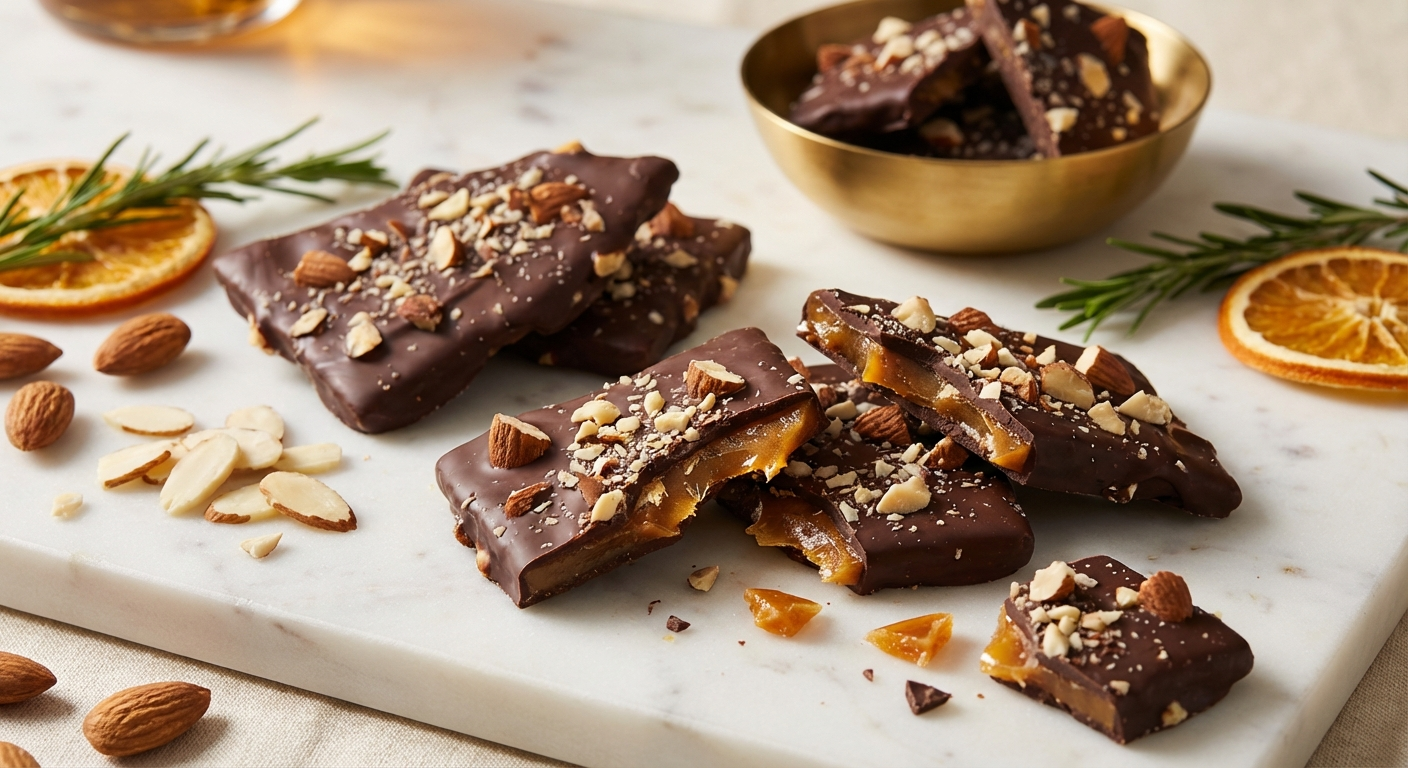
Ingredients
- 2 cups (4 sticks) unsalted butter, cut into pieces
- 2 cups granulated sugar
- 1/4 cup water
- 1/4 teaspoon salt
- 1 teaspoon pure vanilla extract
- 2 cups semi-sweet chocolate chips
- 1 1/2 cups finely chopped toasted almonds, divided
Why This English Butter Toffee Recipe Works
English butter toffee is all about the caramelization of butter and sugar together, creating a confection with incomparable depth of flavor. The key is patience — rushing the cooking process leads to a greasy, separated mess, while slow and steady heat produces that gorgeous amber color and buttery-sweet flavor that makes toffee so irresistible.
Unlike Christmas candies like brittles that can be somewhat one-note, butter toffee has complex layers of flavor: the rich butterscotch base, the bittersweet chocolate coating, and the toasty crunch of almonds. It's sophisticated enough for adult gift-giving but universally loved by all ages.
This recipe uses a traditional British toffee-making technique that dates back centuries. The slow cooking method ensures proper emulsification of butter and sugar, preventing the dreaded separation that ruins lesser toffee recipes. Many families include butter toffee in their Christmas cookie and candy gift boxes because it travels well, keeps for weeks, and looks absolutely stunning when packaged in clear cellophane or decorative tins.
The Christmas Tradition of Homemade Toffee
Making toffee at Christmas is a beloved tradition in British and American households alike. The satisfying snap when you break a perfect piece, the rich aroma of caramelizing butter that fills your kitchen, and the pride of creating something genuinely impressive from just a handful of ingredients — these are the moments that make holiday candy-making so rewarding.
Butter toffee pairs beautifully with other chocolate confections in holiday gift boxes, and the contrast between crispy toffee and creamy Christmas fudge gives recipients variety. For a complete homemade candy assortment, add peppermint bark and salted caramels to create a gourmet gift that rivals anything from expensive candy shops.
English Butter Toffee vs. American Toffee: Understanding the Difference
While American-style "Heath bar" toffee tends to be thinner and more brittle, traditional English butter toffee is richer, thicker, and has a deeper butterscotch flavor due to longer cooking time and higher butter content. The British version also typically includes a generous chocolate coating on one or both sides, making it more of a luxury confection than a simple hard candy.
Regional variations exist throughout England, with some Yorkshire recipes calling for black treacle (similar to molasses) for extra depth, while Scottish versions sometimes incorporate a touch of whisky. This recipe follows the classic English approach: pure butter, sugar, and vanilla for clean butterscotch flavor, topped with quality chocolate and toasted almonds.
The key difference between toffee and caramel is temperature: caramels are cooked to the firm-ball stage (around 245-250°F) for a chewy texture, while toffee reaches hard-crack stage (300°F) for that characteristic snap. Both are delicious Christmas candy options, just with different textures and uses.
Step-by-Step Instructions
Prepare Your Workspace
-
Line the pan. Line a large rimmed baking sheet (18x13 inches) with a silicone baking mat or parchment paper. Do not grease it — the butter in the toffee provides all the release you need.
-
Toast the almonds. Spread the almonds on a separate baking sheet and toast at 350°F for 8 to 10 minutes, stirring halfway through, until golden and fragrant. Let cool, then finely chop. Divide into two portions: 1 cup for the toffee and 1/2 cup for topping.
-
Set up your station. Have your candy thermometer ready, the chocolate chips measured, and the almonds within reach. Once the toffee reaches temperature, you’ll need to work quickly.
Cook the Toffee
-
Melt the butter. In a heavy-bottomed 3-quart saucepan, melt the butter over medium heat. Stir occasionally until completely melted.
-
Add sugar and water. Add the sugar, water, and salt to the melted butter. Stir with a wooden spoon or heatproof spatula until the sugar is moistened.
-
Cook to hard crack stage. Attach your candy thermometer to the side of the pan, making sure the tip doesn’t touch the bottom. Increase heat to medium-high and bring to a boil, stirring constantly. Continue cooking, stirring frequently (especially toward the end), until the mixture reaches 300°F (hard crack stage). This takes 15 to 20 minutes. The toffee will turn a rich golden amber color and smell intensely buttery.
-
Finish the toffee. Remove from heat immediately when it reaches 300°F — even a few degrees higher can make the toffee taste burnt. Quickly stir in the vanilla extract (careful, it will bubble and steam) and 1 cup of the toasted almonds.
-
Pour and spread. Immediately pour the hot toffee onto the prepared baking sheet. Working quickly, use a heatproof offset spatula to spread it into an even layer, about 1/4-inch thick. Don’t worry if it doesn’t fill the whole pan perfectly.
Add the Chocolate Topping
-
Add chocolate chips. Let the toffee cool for 2 minutes, then sprinkle the chocolate chips evenly over the surface. Wait another 3 minutes for the residual heat to melt the chocolate.
-
Spread the chocolate. Using an offset spatula, spread the now-soft chocolate into an even layer covering the entire toffee surface.
-
Top with almonds. While the chocolate is still soft, sprinkle the remaining 1/2 cup of chopped almonds evenly over the top. Press them gently into the chocolate so they adhere.
-
Cool completely. Let the toffee cool at room temperature for at least 1 hour, or refrigerate for 30 minutes to speed up the process. The chocolate should be completely set before breaking.
-
Break into pieces. Once fully set, break the toffee into irregular pieces by hand, or cut with a sharp knife for more uniform shapes.
Expert Tips for Perfect Butter Toffee
- Temperature precision matters. Use a reliable candy thermometer and calibrate it by testing in boiling water (should read 212°F at sea level). Even 5 degrees off can affect your results. This is crucial for all candy-making recipes that require specific temperatures.
- Don't stop stirring. Continuous stirring prevents hot spots and helps the butter and sugar emulsify properly. Separation (where butter pools on top) usually means the heat was too high or stirring was inconsistent. Think of it like making caramel for salted caramels — constant attention prevents disasters.
- Watch the color, not just the number. The toffee should be a deep golden amber when done. If it's still pale yellow at 300°F, your thermometer might be off — trust the color as a secondary indicator. This visual cue is especially helpful for experienced candy makers.
- Weather matters. High humidity can make candy sticky and soft. Aim to make toffee on a dry day, or work in an air-conditioned kitchen. This applies to most Christmas cookie decorating and candy-making as well.
- Almond alternatives. Pecans, hazelnuts, or macadamia nuts all work beautifully. You can also leave the toffee plain for a simpler version that highlights the buttery caramel flavor.
- Double chocolate option. For even more chocolate decadence, coat both sides: let the first side of chocolate set, flip the toffee over, and repeat the chocolate-and-nut process on the other side. This creates a truly luxurious confection worthy of gourmet gift-giving.
- Make it ahead. Toffee is one of the best make-ahead Christmas candies because it actually improves with a few days of aging as the flavors meld together. Make it up to 2 weeks before you need it.
- Storage. Store toffee in an airtight container at room temperature for up to 2 weeks. In the refrigerator, it keeps for a month. Layer pieces between wax paper to prevent sticking. Toffee also freezes beautifully for up to 3 months — perfect for early holiday prep.
- Gift packaging ideas. Pack toffee pieces in cellophane bags tied with festive ribbon, or arrange in decorative tins lined with tissue paper. Include a handwritten label with the name and storage instructions. Pair with chocolate truffles and peppermint bark for an impressive homemade candy assortment.
- Serving suggestions. Beyond gifting, butter toffee makes an elegant addition to Christmas dessert tables. Crush it and sprinkle over ice cream, fold pieces into brownie batter, or serve alongside hot cocoa or coffee for a sweet crunch.
Troubleshooting
- Toffee separated (butter pooled on top): Heat was too high or stirring was inconsistent. Next time, keep heat at medium-high and stir constantly, especially in the last few minutes.
- Toffee is chewy instead of crisp: It didn't reach a high enough temperature. Use a calibrated thermometer and make sure to reach 300°F.
- Chocolate won't spread: You waited too long and the toffee cooled too much. Try placing the baking sheet in a warm oven (200°F) for a minute to soften the chocolate.
- Toffee is too dark or bitter: It went past 300°F. Watch carefully and remove from heat the moment it hits temperature.
Planning Your Christmas Candy-Making Day
Making multiple types of candy in one day is a cherished holiday tradition for many families. If you're planning a candy-making session, consider this strategic order:
- Start with no-cook recipes like chocolate truffles and peppermint bark to get them cooling while you work
- Move to recipes requiring precision like butter toffee and salted caramels when you're fresh and focused
- Finish with forgiving recipes like microwave fudge that don't require exact temperatures
This approach maximizes your kitchen efficiency and ensures you're giving precision recipes your full attention. Many families make candy-making a multi-generational event, with kids helping to crush peppermint candies or wrap finished confections while adults handle the hot sugar work.
More Christmas Candy & Sweet Treats
If you love making homemade candy, these recipes belong in your holiday kitchen rotation:
- Classic Chocolate Truffles — Silky ganache truffles in 8 flavor variations, perfect for gifting alongside your toffee
- Soft Salted Caramels — Chewy, buttery caramels with flaky sea salt that wrap beautifully in wax paper squares
- Peppermint Bark — The classic no-thermometer Christmas candy you can make in 20 minutes, perfect for beginners
- Classic Christmas Fudge — Rich, creamy fudge that sets up perfectly every time with our foolproof technique
- Classic Sugar Cookies with Royal Icing — The perfect complement to a homemade candy assortment in holiday gift boxes
- Christmas Dessert Recipes — Expand beyond candy with showstopping holiday cakes, pies, and trifles
Browse our full Christmas candy recipes collection for more homemade confection ideas, or explore holiday cookie recipes to create the ultimate Christmas gift box. Looking for drinks to pair with your sweet treats? Check out our festive holiday drink recipes including hot cocoa, mulled wine, and eggnog.
Get Christmas recipes in your inbox
New holiday recipes every week during the Christmas season.