British Christmas Pudding (Traditional Recipe)
Authentic British Christmas pudding — a rich, steamed fruit cake made weeks ahead, aged with brandy, and flambéed at the table for a spectacular holiday finale.
Ingredients
- 1 cup all-purpose flour
- 2 cups fresh breadcrumbs
- 1 cup dark brown sugar, packed
- 1 cup suet, shredded
- 2 tsp ground cinnamon
- 1 tsp ground ginger
- ½ tsp ground nutmeg
- ¼ tsp ground cloves
- ½ tsp salt
- 2 cups raisins
- 1 cup golden sultanas
- 1 cup currants
- ½ cup candied mixed peel, finely chopped
- ½ cup blanched almonds, roughly chopped
- Zest of 1 large orange
- Zest of 1 lemon
- 3 large eggs, beaten
- ⅔ cup brandy or dark rum
- 2 tbsp black treacle or molasses
- Juice of 1 orange
British Christmas pudding is nothing like American pudding. This is a dense, rich, dark steamed cake packed with dried fruits, warm spices, and generous amounts of brandy — traditionally made weeks before Christmas, aged in a dark cupboard, then steamed again and dramatically flambéed at the table. It's one of Britain's most sacred holiday traditions.
What Is Christmas Pudding?
Christmas pudding (also called plum pudding, though it contains no plums) is a steamed dessert made from suet (beef or vegetarian fat), breadcrumbs, dried fruits, spices, eggs, and alcohol. The mixture is steamed for hours until dense and moist, then wrapped and stored for weeks or even months. The aging process allows the flavors to deepen and meld together.
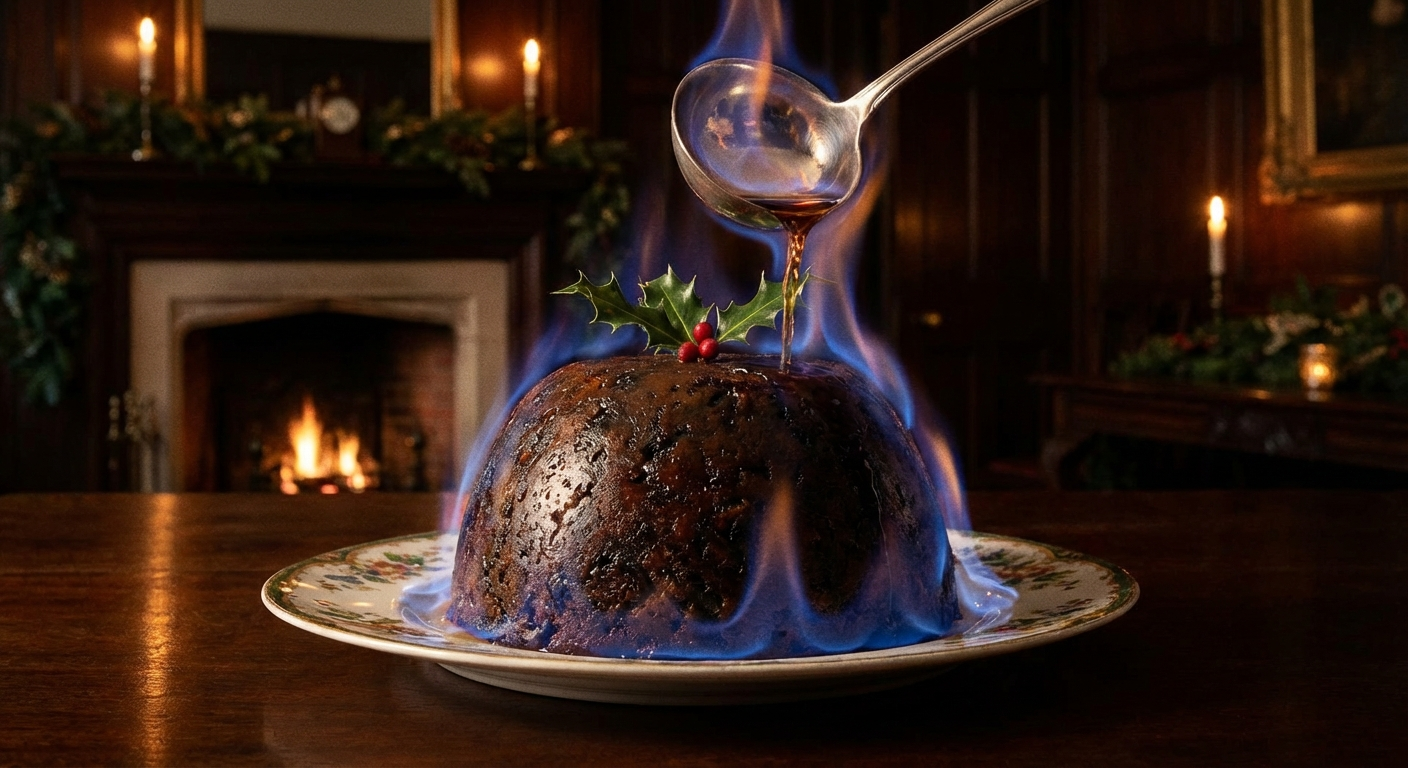
On Christmas Day, the pudding is steamed again to reheat it, turned out onto a serving plate, doused with warm brandy, and set alight. The blue flames dancing across the dark pudding create a spectacular moment — often the grand finale of Christmas dinner.
Why Make It Weeks Ahead?
British families traditionally make Christmas pudding on "Stir-Up Sunday" — the last Sunday before Advent, usually in late November. Each family member stirs the mixture and makes a wish. The pudding is then wrapped, stored in a cool dark place, and "fed" with brandy every week or two until Christmas.
The aging process isn't just tradition — it genuinely improves the pudding. The alcohol preserves the fruit, the flavors deepen and become more complex, and the texture becomes richer. A pudding made the day before will be good; one made six weeks ahead will be spectacular.
Ingredients
Dry Ingredients
- 1 cup (125g) all-purpose flour
- 2 cups (200g) fresh breadcrumbs — white or whole wheat, from day-old bread
- 1 cup (200g) dark brown sugar — packed
- 1 cup (225g) suet — shredded beef or vegetarian suet (available at British grocers or online)
- 2 tsp ground cinnamon
- 1 tsp ground ginger
- ½ tsp ground nutmeg
- ¼ tsp ground cloves
- ½ tsp salt
Fruits & Nuts
- 2 cups (300g) raisins
- 1 cup (150g) golden sultanas
- 1 cup (150g) currants
- ½ cup (75g) candied mixed peel — finely chopped
- ½ cup (75g) blanched almonds — roughly chopped
- Zest of 1 large orange
- Zest of 1 lemon
Wet Ingredients
- 3 large eggs — beaten
- ⅔ cup (150ml) brandy or dark rum — plus more for feeding and flambéing
- 2 tbsp black treacle or molasses
- Juice of 1 orange
Step-by-Step Instructions
Step 1: Mix the Pudding
In a very large bowl, combine all the dry ingredients: flour, breadcrumbs, sugar, suet, spices, and salt. Add all the dried fruits, candied peel, almonds, and citrus zests. Mix thoroughly with your hands or a wooden spoon until everything is evenly distributed.
Step 2: Add Wet Ingredients
Make a well in the center of the dry mixture. Add the beaten eggs, brandy, treacle, and orange juice. Stir everything together until you have a thick, sticky mixture. The consistency should be similar to thick cake batter — it should drop reluctantly from a spoon.
Traditional moment: Have each family member give the mixture a stir and make a wish. Stir from east to west to honor the journey of the Magi.
Step 3: Prepare the Basin
Generously butter a 2-quart (2-liter) pudding basin or heatproof bowl. Spoon the mixture into the basin, pressing down gently to eliminate air pockets. Smooth the top.
Step 4: Cover for Steaming
Cut a circle of parchment paper and a circle of aluminum foil, each about 2 inches larger than the top of your basin. Make a 1-inch pleat in the center of both (to allow for expansion). Place the parchment on top of the pudding, then the foil. Secure tightly with string tied around the rim. Create a string handle over the top for easy lifting.
Step 5: Initial Steaming (6 Hours)
Place the basin on an upturned saucer or trivet in a large pot. Pour in enough boiling water to come halfway up the sides of the basin. Cover with a lid and steam for 6 hours, checking occasionally to ensure the water hasn't boiled away. Top up with more boiling water as needed.
Step 6: Cool and Store
Remove the basin from the pot and let cool completely. Once cool, remove the covering and prick the surface all over with a skewer. Drizzle 2-3 tablespoons of brandy over the top, letting it soak in. Re-cover with fresh parchment and foil, then wrap the entire basin in a clean tea towel or store in an airtight container.
Store in a cool, dark place (not the refrigerator) for at least 2 weeks, ideally 4-8 weeks. Every week or two, unwrap, prick the surface, and "feed" it with another tablespoon of brandy.
Step 7: Christmas Day Reheating
On Christmas Day, steam the pudding again for 2 hours using the same method as before. Let it stand for 5 minutes, then carefully turn it out onto a warmed serving plate.
Step 8: Flambé at the Table
Heat 3-4 tablespoons of brandy in a small saucepan until just warm (do not boil). Pour it over the pudding at the table, then immediately light it with a long match. The brandy will ignite with dramatic blue flames. Carry the flaming pudding to the table for maximum effect!
Serve slices with brandy butter, hard sauce, custard, or whipped cream.
Pro Tips for Perfect Christmas Pudding
- Don't skip the aging — The difference between a 2-week-old and 6-week-old pudding is genuinely noticeable.
- Use quality dried fruit — The fruit is the star. Cheap raisins make cheap pudding.
- Suet is essential — Vegetarian suet works fine, but you need suet. Butter won't give the same texture.
- Keep it topped up — Never let the steaming water boil away. Set a timer to remind you to check.
- Make extras — Puddings keep for a year or more. Make several and give them as gifts.
- Test the water depth — Water should come halfway up the basin, no higher.
- Warm the brandy gently — Too hot and it won't ignite; too cool and it won't flame well.
What to Serve With Christmas Pudding
British tradition calls for rich, creamy accompaniments to balance the dense, spiced pudding:
- Brandy butter — Softened butter beaten with powdered sugar and brandy until fluffy and pale.
- Hard sauce — Similar to brandy butter but firmer, often flavored with rum.
- Custard — Hot, pouring custard (like crème anglaise) is traditional and delicious.
- Whipped cream — Lightly sweetened and spiked with a bit of brandy or vanilla.
- Ice cream — Vanilla ice cream makes a wonderful contrast to the warm, rich pudding.
For a complete British Christmas feast, serve this pudding after a traditional Christmas dinner alongside other holiday desserts. Pair with mulled wine or a warming hot toddy.
Storage and Make-Ahead
After initial steaming: Store in a cool, dark cupboard for 2-8 weeks (or up to a year). Feed with brandy every 2 weeks.
After reheating: Any leftover pudding can be wrapped and kept in the refrigerator for up to a week. Reheat slices in the microwave for 30-45 seconds.
Freezing: Christmas pudding freezes beautifully for up to a year. Thaw overnight in the refrigerator before reheating.
Related Christmas Recipes
- German Christmas Stollen — Another aged Christmas tradition worth the wait
- Italian Panettone — Festive European holiday bread
- Christmas Desserts — More showstopping holiday finales
- Christmas Cookies — Easier holiday baking projects
- Holiday Cocktails & Drinks — Festive beverages to serve alongside
Frequently Asked Questions
Can I make Christmas pudding without suet?
Technically yes, using butter or vegetable shortening, but the texture won't be authentic. Suet creates the characteristic dense, moist crumb that defines Christmas pudding. Vegetarian suet (made from vegetable fats) works perfectly if you want to avoid animal products.
Why is it called plum pudding when there are no plums?
In medieval England, "plums" was a general term for any dried fruit, particularly raisins. The name stuck even though the pudding evolved to include various dried fruits but rarely actual plums.
Is Christmas pudding safe to eat after aging for weeks?
Yes! The high sugar content, alcohol, and the initial long steaming create an environment that's inhospitable to harmful bacteria. As long as the pudding is stored properly (cool, dark, wrapped), it's perfectly safe and actually improves with age.
Can I use rum instead of brandy?
Absolutely. Dark rum is a traditional alternative and gives a slightly different but equally delicious flavor profile. Some families use a combination of both.
What if I don't have a pudding basin?
Any heatproof bowl will work — ceramic, glass, or metal. Avoid plastic. A 2-quart bowl is ideal for this recipe. You can also use two smaller bowls and adjust steaming time down slightly.
This traditional British Christmas pudding is a labor of love that rewards patience. The first time you flambé it at the table and watch your family's faces light up with the blue flames, you'll understand why British families have been making this for generations.
Get Christmas recipes in your inbox
New holiday recipes every week during the Christmas season.