Mexican Buñuelos (Crispy Christmas Fritters)
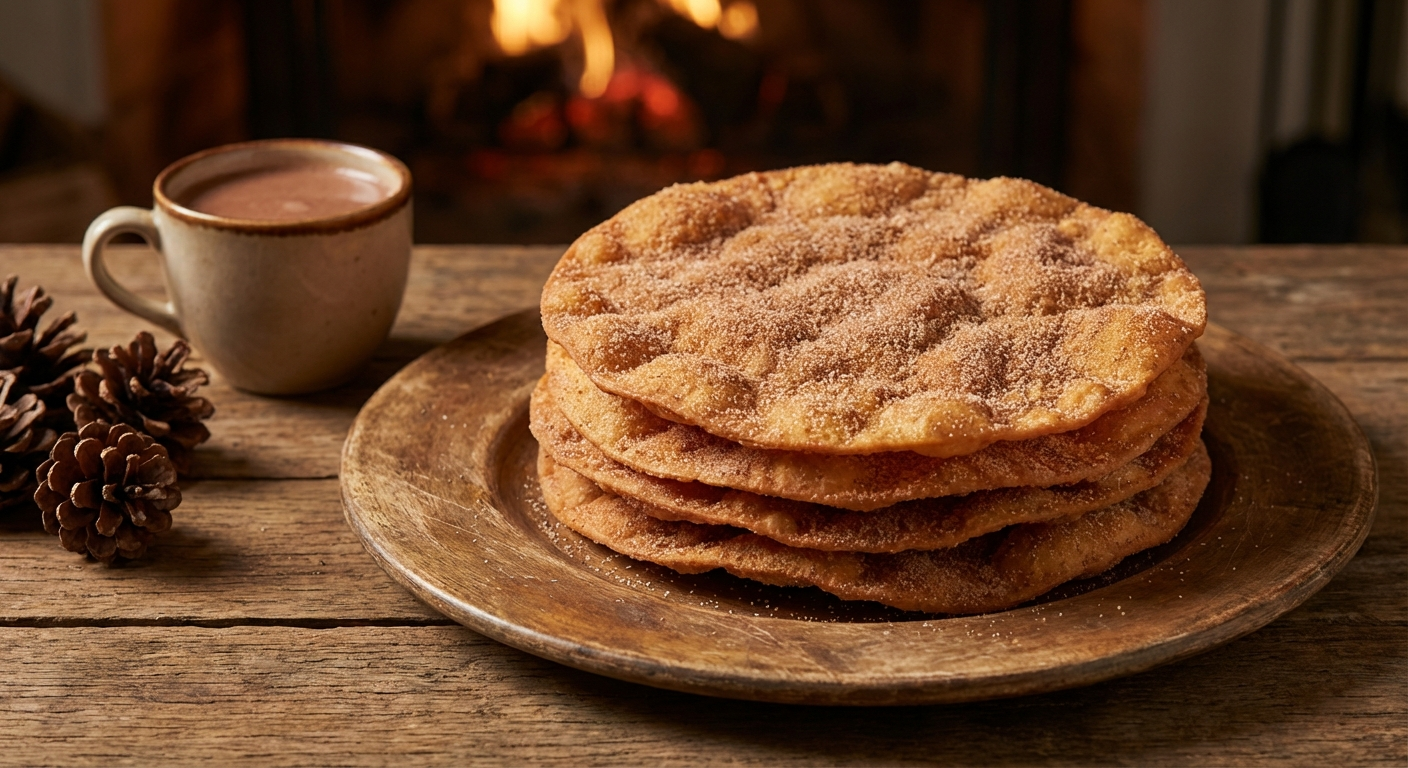
Authentic Mexican buñuelos — thin, crispy fried dough discs dusted with cinnamon sugar and drizzled with piloncillo syrup. A beloved Christmas and New Year's tradition throughout Mexico and Latin America.
Ingredients
Mexican buñuelos are thin, crispy fried dough rounds dusted with cinnamon sugar — a festive treat served during Christmas season (Navidad) and New Year's throughout Mexico and Latin America. Every family has their own version, but all share that signature crispy, shattering texture and warm spice flavor.
What Are Buñuelos?
Buñuelos (pronounced boon-YWAY-lows) are thin rounds of wheat dough that are stretched almost translucent, then fried until golden and crispy. They're traditionally served during Las Posadas (the nine nights before Christmas) and on Nochebuena (Christmas Eve), often alongside hot chocolate or atole.
The dough is simple — flour, butter, eggs, and a touch of anise — but the technique of stretching it paper-thin and frying it to crispy perfection is what makes buñuelos special. They shatter when you bite them, releasing a cloud of cinnamon sugar.
Regional Variations
Buñuelos vary across Mexico and Latin America:
- Mexican (flat rounds) — Stretched thin, fried flat, dusted with cinnamon sugar or drizzled with piloncillo syrup
- Colombian — Made with cheese in the dough, served with syrup or honey
- Central American — Often served in a sweet syrup flavored with cinnamon and cloves
- New Mexican — Sometimes puffy rather than flat, similar to sopapillas
This recipe is the classic Mexican flat style — the most common version served at Christmas.
Ingredients
For the Dough
- 4 cups (500g) all-purpose flour — plus more for rolling
- 2 tsp baking powder
- 1 tsp salt
- 2 tbsp granulated sugar
- 1 tsp ground anise — or ½ tsp anise seeds, crushed (traditional but optional)
- ¼ cup (60g) unsalted butter — softened
- 2 large eggs
- ¾ cup (180ml) warm water or milk — approximately
For Frying
- Vegetable oil or lard — enough for 2-3 inches in a large skillet
For Serving
- 1 cup granulated sugar
- 2 tbsp ground cinnamon
Optional: Piloncillo Syrup
- 1 cone (8 oz) piloncillo — or dark brown sugar
- 2 cups water
- 1 cinnamon stick
- 2 whole cloves
Step-by-Step Instructions
Step 1: Make the Dough
In a large bowl, whisk together flour, baking powder, salt, sugar, and anise. Cut in the softened butter until the mixture resembles coarse crumbs. Make a well in the center and add the eggs and ½ cup of warm water.
Stir with a wooden spoon, then use your hands to bring the dough together. Add more water 1 tablespoon at a time if needed — the dough should be soft but not sticky, similar to pizza dough.
Step 2: Knead and Rest
Turn the dough out onto a lightly floured surface and knead for 5-7 minutes until smooth and elastic. Form into a ball, cover with a damp towel or plastic wrap, and let rest for at least 1 hour at room temperature. (This rest is essential — it allows the gluten to relax so the dough stretches thin.)
Step 3: Make the Syrup (Optional)
While the dough rests, make the piloncillo syrup if using. Combine piloncillo (or brown sugar), water, cinnamon stick, and cloves in a saucepan. Bring to a boil, stirring until the piloncillo dissolves. Reduce heat and simmer for 15-20 minutes until slightly thickened. Strain out the spices and keep warm.
Step 4: Divide and Roll
Divide the rested dough into 12 equal pieces (about the size of a golf ball). Keep covered while you work.
On a lightly floured surface, roll one piece into a very thin round, about 8-10 inches in diameter. The dough should be almost translucent — you should be able to see your hand through it. Don't worry if it's not a perfect circle.
Step 5: Heat the Oil
Heat 2-3 inches of oil in a large, deep skillet to 375°F (190°C). The oil is ready when a small piece of dough dropped in sizzles immediately and floats to the surface.
Step 6: Fry the Buñuelos
Carefully slide one round of dough into the hot oil. It will puff slightly and start to bubble. Fry for 30-45 seconds on the first side until golden brown, then flip and fry for another 30 seconds on the other side.
Use a slotted spoon or spider to transfer to a paper towel-lined plate. The buñuelo should be crispy and golden, with a few darker brown spots — that's perfect.
Step 7: Coat and Serve
While still warm, dust generously with the cinnamon-sugar mixture (combine 1 cup sugar + 2 tbsp cinnamon in a shallow dish). Alternatively, drizzle with warm piloncillo syrup.
Repeat with remaining dough rounds, allowing the oil to come back to temperature between batches.
Pro Tips for Perfect Buñuelos
- Rest the dough fully — 1 hour minimum, 2 hours is even better. This makes stretching much easier.
- Stretch thin but not torn — Buñuelos should be thin enough to be slightly translucent but not so thin they tear when you lift them.
- Maintain oil temperature — Too hot and they burn before cooking through; too cool and they absorb oil and get greasy.
- Don't crowd the pan — Fry one at a time for best control and even cooking.
- Serve fresh — Buñuelos are best within a few hours of frying. They lose crispness as they sit.
- Use a thermometer — Consistent oil temperature is key to crispy, not greasy, buñuelos.
- Try lard for authenticity — Many traditional recipes use lard for frying, which adds flavor.
Serving Suggestions
Buñuelos are traditionally served:
- With hot chocolate (champurrado or Mexican hot chocolate) for dipping
- Alongside atole (warm corn-based drink)
- Drizzled with piloncillo syrup and a sprinkle of cinnamon
- As part of a Christmas dessert spread with other holiday sweets
- During Las Posadas celebrations as street food
For a complete Mexican Christmas celebration, serve buñuelos with Mexican hot chocolate and alongside other international Christmas recipes.
Cultural Tradition: Breaking the Plate
In some Mexican regions, there's a fun New Year's tradition: buñuelos are served on clay plates, and after eating, you throw the plate on the ground to shatter it. The breaking symbolizes leaving behind the old year's troubles. Obviously, this is optional — and messy! — but it's a joyful tradition worth knowing about.
Storage
Fried buñuelos: Store in an airtight container at room temperature for up to 2 days. They'll soften slightly but are still delicious. Re-crisp in a 350°F oven for 3-5 minutes if desired.
Uncooked dough: Can be refrigerated for up to 24 hours. Bring to room temperature before rolling.
Related Christmas Recipes
- British Christmas Pudding — Another international holiday tradition
- German Christmas Stollen — European Christmas bread
- Christmas Cookies — More holiday baking ideas
- Christmas Desserts — Festive sweet finales
- Holiday Drinks — Mexican hot chocolate to serve alongside
Frequently Asked Questions
What's the difference between buñuelos and sopapillas?
Buñuelos are rolled very thin and fried flat until crispy. Sopapillas use a similar dough but are rolled thicker, cut into squares, and puff up into hollow pillows when fried. Sopapillas are usually served with honey; buñuelos with cinnamon sugar or syrup.
Can I skip the anise?
Yes! Anise adds traditional flavor but isn't essential. Some families use it, some don't. You can substitute a small amount of vanilla extract or cinnamon in the dough if you prefer.
Can I bake buñuelos instead of frying?
Baking won't give you the same crispy, shattering texture that defines buñuelos. They need to be fried to achieve that characteristic crunch. If you must avoid frying, try making Mexican wedding cookies or polvorones instead.
What is piloncillo?
Piloncillo is unrefined Mexican brown sugar sold in cone shapes. It has a deep, complex molasses flavor. Find it in Latin markets or online. Dark brown sugar mixed with a bit of molasses makes a good substitute.
These crispy, golden buñuelos are a festive treat worth mastering. The scent of cinnamon and fried dough is pure Christmas magic, and the satisfying crunch when you bite into one is impossible to resist.
Get Christmas recipes in your inbox
New holiday recipes every week during the Christmas season.