Italian Panettone
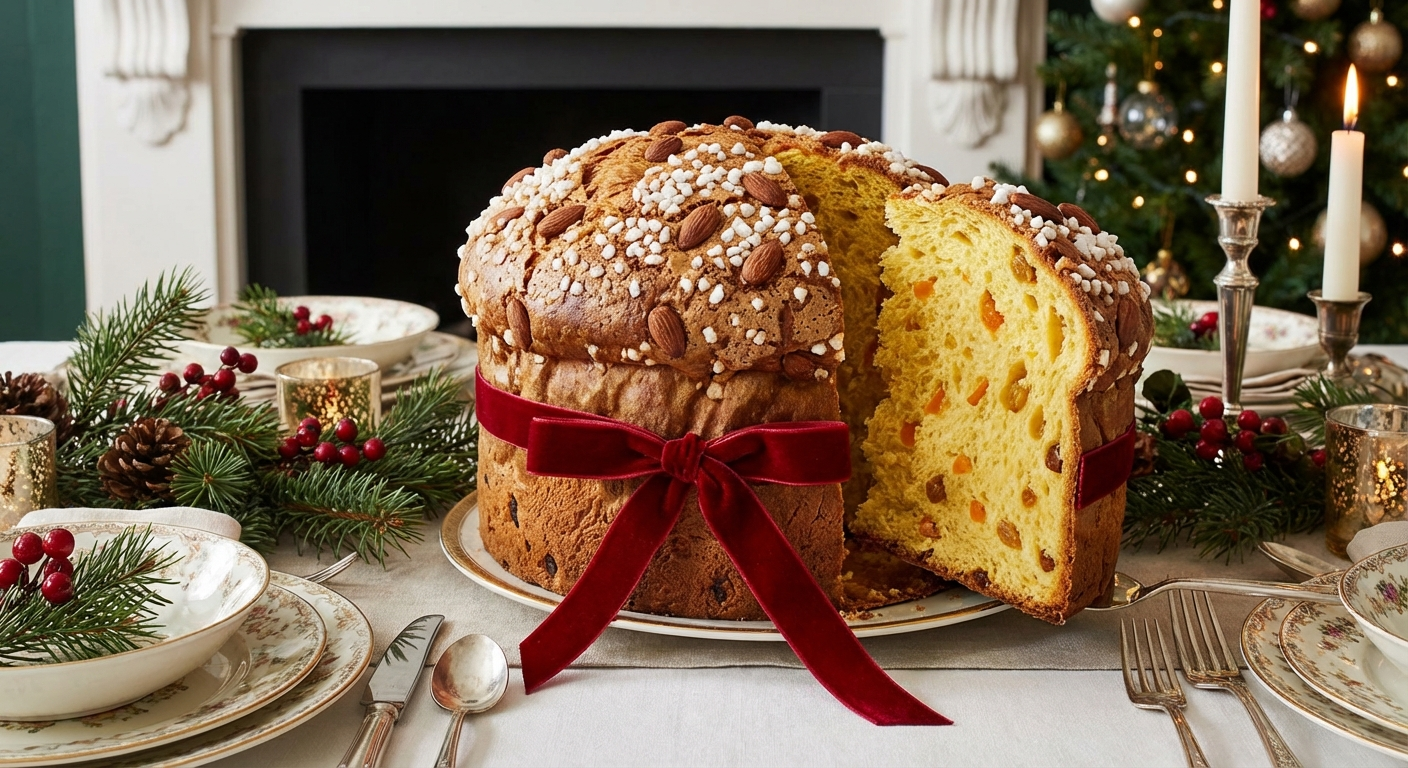
A beautifully domed Italian Christmas bread studded with candied orange peel, citron, and golden raisins. This authentic panettone features a tender, buttery brioche-like crumb with an irresistible aroma of vanilla and citrus. It requires patience and time, but the result is an extraordinary holiday bread worthy of any Italian bakery.
Ingredients
- 1/2 cup warm whole milk (105-110°F)
- 2 1/4 teaspoons active dry yeast (1 packet)
- 4 cups bread flour, plus more for kneading
- 1/2 cup granulated sugar
- 1 teaspoon salt
- 4 large egg yolks
- 1 large egg
- 2 teaspoons pure vanilla extract
- 1 tablespoon finely grated orange zest
- 1 tablespoon finely grated lemon zest
- 3/4 cup (1 1/2 sticks) unsalted butter, softened and cut into small pieces
- 1/2 cup golden raisins
- 1/3 cup candied orange peel, diced
- 1/4 cup candied citron, diced
- 2 tablespoons dark rum or brandy (for soaking the fruit)
- 1 egg yolk mixed with 1 tablespoon milk (for egg wash)
- 2 tablespoons pearl sugar or coarse sugar (for topping, optional)
- 1 tablespoon sliced almonds (for topping, optional)
Instructions
-
Soak the dried fruit. The evening before you plan to bake, combine the golden raisins, candied orange peel, and candied citron in a small bowl. Pour the rum or brandy over the fruit and toss to coat. Cover with plastic wrap and let the fruit macerate at room temperature overnight, or for at least 2 hours.
-
Activate the yeast. Pour the warm milk into a small bowl and sprinkle the yeast over the surface. Add a pinch of the measured sugar and stir gently. Let it stand for 8 to 10 minutes until the mixture is foamy and bubbly. If it does not foam, the yeast may be expired; start over with fresh yeast.
-
Make the dough. In the bowl of a stand mixer fitted with the dough hook, combine the bread flour, sugar, and salt. Mix briefly on low speed to combine. Add the activated yeast mixture, egg yolks, whole egg, vanilla extract, orange zest, and lemon zest. Mix on low speed until the ingredients come together into a shaggy dough, about 2 minutes.
-
Knead the dough. Increase the mixer speed to medium and knead for 8 to 10 minutes until the dough becomes smooth and elastic. The dough will be quite sticky at first; resist the temptation to add extra flour.
-
Incorporate the butter. With the mixer running on medium-low speed, add the softened butter one or two pieces at a time, waiting until each addition is fully absorbed before adding the next. This process takes about 8 to 10 minutes. The dough will look shaggy and broken at times but will eventually come together into a smooth, glossy, elastic dough that pulls cleanly away from the sides of the bowl.
-
Add the fruit. Drain any remaining liquid from the soaked fruit. Add the fruit to the dough and mix on low speed for 1 to 2 minutes until evenly distributed. You may need to finish folding in the fruit by hand.
-
First rise. Shape the dough into a ball and place it in a large, lightly oiled bowl. Cover tightly with plastic wrap and let it rise at warm room temperature (75-78°F) for 2 to 3 hours until doubled in size. Panettone dough is enriched and heavy, so it rises more slowly than standard bread dough.
-
Shape the panettone. Prepare a panettone mold (6-inch diameter paper mold or a tall, straight-sided 2-quart oven-safe container lined with parchment). Turn the risen dough out onto a lightly floured surface. Gently deflate it and shape it into a tight, smooth ball by tucking the edges underneath. Place the dough ball seam-side down into the prepared mold. The dough should fill the mold about one-third to one-half full.
-
Second rise. Cover the mold loosely with plastic wrap or a clean kitchen towel. Let the dough rise for 2 to 3 hours until it has risen to just above the rim of the mold. The dough should look puffy and dome-shaped.
-
Preheat and prepare for baking. Preheat the oven to 350°F (175°C) with a rack in the lower-middle position. Gently brush the top of the panettone with the egg wash. If desired, sprinkle with pearl sugar and sliced almonds. Using a very sharp knife or razor blade, cut a shallow cross or X on the top of the dome.
-
Bake. Bake for 45 to 55 minutes until the panettone is deep golden brown and an instant-read thermometer inserted into the center reads 190°F (88°C). If the top is browning too quickly, tent it loosely with aluminum foil after 30 minutes.
-
Cool upside down. This is the traditional and essential step. Immediately after removing the panettone from the oven, insert two long wooden skewers or thin dowels horizontally through the base of the bread (about 1 inch from the bottom). Invert the panettone and suspend it between two objects (like two tall cans or pots) so it hangs upside down. Let it cool completely in this inverted position for at least 4 hours. This prevents the delicate crumb from collapsing under its own weight.
-
Serve. Once completely cool, turn the panettone right-side up and carefully remove the skewers. Slice into wedges and serve.
Tips
-
Upside-down cooling is non-negotiable. If you skip this step, the panettone will collapse and become dense. The inverted cooling allows the structure to set as it cools. Professional Italian bakeries all use this technique.
-
Patience with the butter. Incorporating the butter into the dough is the most critical and time-consuming step. Adding it gradually allows the gluten network to absorb the fat without breaking down. Do not rush this process.
-
Room temperature matters. Panettone dough rises best at a consistent 75-78°F. If your kitchen is cold, place the dough in the oven with just the light on, or next to a warm (not hot) appliance.
-
Candied fruit quality. Seek out high-quality candied orange peel and citron from an Italian deli or specialty store. Cheap, neon-colored candied fruit from the supermarket baking aisle has an artificial flavor that will detract from the final product.
-
Storage: Wrap the panettone tightly in plastic wrap and store at room temperature for up to 5 days. It also freezes beautifully for up to 2 months when wrapped in plastic and then foil.
-
Serving suggestions: In Italy, panettone is traditionally served with mascarpone cream, a glass of sparkling wine (like Moscato d’Asti or Prosecco), or a cup of espresso. Day-old panettone also makes incredible French toast or bread pudding.
-
Paper molds specifically designed for panettone are available online and at specialty baking shops. They provide the classic tall, cylindrical shape and support the dough as it rises.
Related Recipes & Holiday Baking
Panettone is a project, but it earns its place on the holiday table. If you love Italian Christmas traditions, here's what pairs beautifully:
- German Stollen — Germany's answer to panettone: a dense, marzipan-filled Christmas bread that improves with weeks of aging.
- Christmas Desserts — Day-old panettone makes extraordinary bread pudding or French toast — explore our dessert recipes for inspiration.
- Christmas Cookie Recipes — Complete your holiday baking marathon with gingerbread, sugar cookies, and Italian-inspired pizzelle.
- Christmas Drinks & Cocktails — In Italy, panettone is traditionally served with Moscato d'Asti or espresso. Find the perfect pairing in our drinks collection.
- Christmas Candy — Chocolate truffles dusted with cocoa alongside a slice of panettone make a stunning dessert plate.
Get Christmas recipes in your inbox
New holiday recipes every week during the Christmas season.