German Stollen (Christmas Bread)
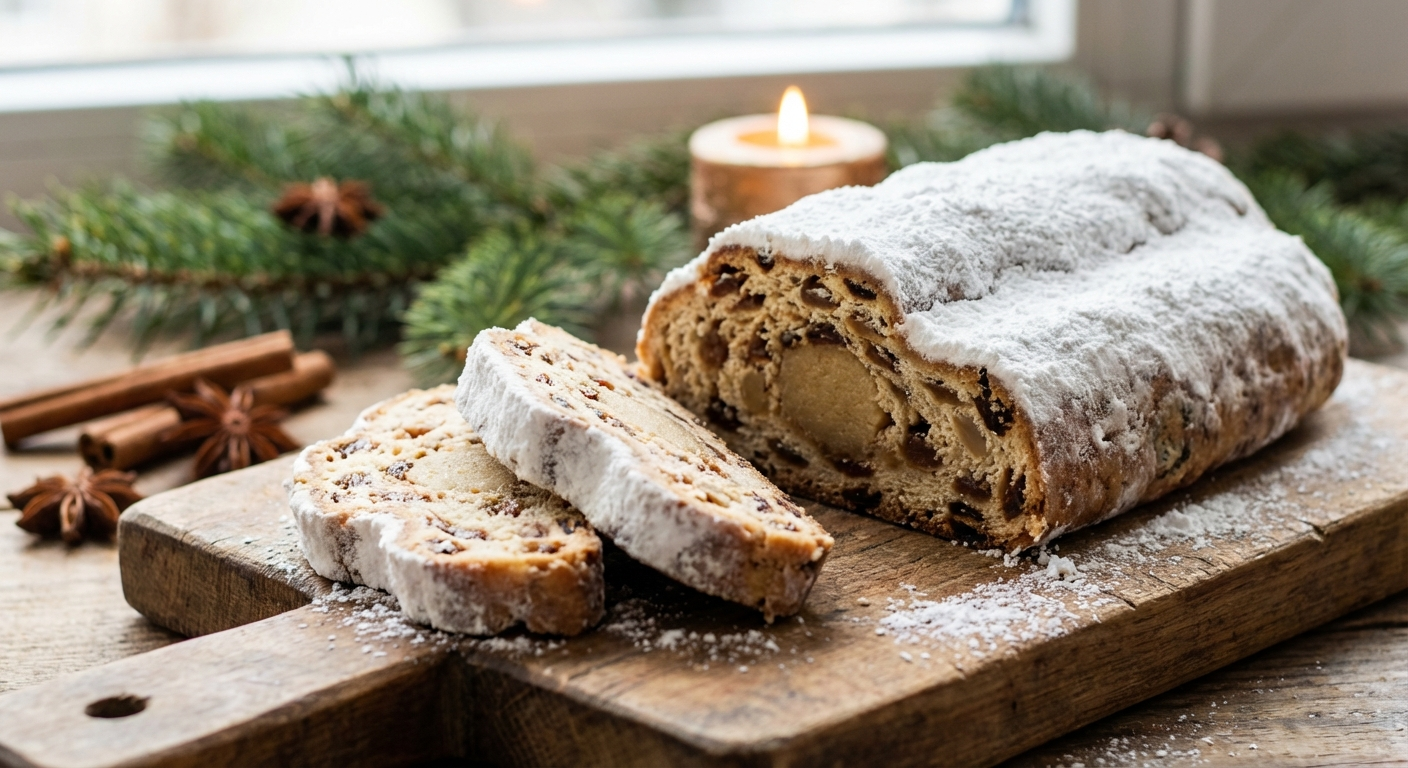
A magnificent German Christmas bread laden with rum-soaked dried fruits, almonds, marzipan, and warm spices, all encased in a thick, snowy coat of powdered sugar. Stollen is traditionally baked weeks before Christmas and improves in flavor as it ages, making it the perfect holiday baking project.
Ingredients
- 1 cup mixed dried fruit (raisins, currants, and diced dried apricots)
- 1/3 cup candied orange peel, diced
- 1/3 cup candied lemon peel, diced
- 1/4 cup dark rum or brandy
- 3 1/2 cups all-purpose flour, plus more for kneading
- 1/3 cup granulated sugar
- 2 1/4 teaspoons instant yeast (1 packet)
- 1 teaspoon salt
- 1 teaspoon ground cardamom
- 1/2 teaspoon ground cinnamon
- 1/4 teaspoon ground nutmeg
- 1/4 teaspoon ground mace
- Zest of 1 lemon
- Zest of 1 orange
- 3/4 cup whole milk, warmed to 110°F
- 1 large egg
- 1 teaspoon pure vanilla extract
- 1/2 teaspoon almond extract
- 3/4 cup (1 1/2 sticks) unsalted butter, softened
- 1/2 cup blanched almonds, roughly chopped
- 7 oz marzipan (almond paste), shaped into a log
- 1/2 cup (1 stick) unsalted butter, melted (for brushing after baking)
- 1 cup powdered sugar (for coating)
Instructions
-
Soak the fruit. The night before baking, combine the mixed dried fruit, candied orange peel, and candied lemon peel in a bowl. Pour the rum or brandy over the fruit, toss well, cover tightly, and let it macerate at room temperature overnight. The fruit should absorb all the liquid and become plump and fragrant.
-
Make the dough. In the bowl of a stand mixer fitted with the dough hook, combine the flour, granulated sugar, instant yeast, salt, cardamom, cinnamon, nutmeg, mace, lemon zest, and orange zest. Mix briefly on low speed. Add the warm milk, egg, vanilla extract, and almond extract. Mix on low speed for 2 to 3 minutes until a rough dough forms.
-
Incorporate the butter. With the mixer on medium-low, add the softened butter a few tablespoons at a time, allowing each addition to be absorbed before adding more. Knead on medium speed for 8 to 10 minutes until the dough is smooth, supple, and slightly tacky. It will not be as elastic as a lean bread dough because of all the butter, but it should pull away from the sides of the bowl.
-
Add the fruit and almonds. Drain any remaining liquid from the soaked fruit. Add the fruit and chopped almonds to the dough. Mix on low speed until evenly distributed, about 1 to 2 minutes. Finish incorporating by hand if necessary, folding the dough over itself on a floured surface.
-
First rise. Place the dough in a large, lightly greased bowl and cover tightly with plastic wrap. Let it rise in a warm spot for 1 1/2 to 2 hours until doubled in size.
-
Shape the stollen. Turn the dough out onto a lightly floured surface and gently press it into a large oval, roughly 12 by 8 inches. Shape the marzipan into a log about 10 inches long and place it lengthwise along the center of the dough, slightly off-center. Fold the larger side of the dough over the marzipan, overlapping the opposite edge by about 1 inch, creating the traditional stollen shape (like a folded oval). Press the folded edge gently to seal. The stollen should resemble a large, slightly flattened loaf with one side higher than the other.
-
Second rise. Transfer the shaped stollen to a large baking sheet lined with parchment paper. Cover loosely with a clean kitchen towel or plastic wrap. Let it rise for 45 minutes to 1 hour. It will not double in size; you are just looking for it to puff up slightly.
-
Bake. Preheat the oven to 325°F (165°C). Bake the stollen for 40 to 50 minutes, until it is a deep golden brown and the internal temperature reaches 190°F (88°C) on an instant-read thermometer. The lower oven temperature prevents the outside from browning too much before the dense interior is cooked through.
-
Butter bath. This is the essential step that defines stollen. As soon as the stollen comes out of the oven, generously brush the entire surface with melted butter. Use all of the melted butter, brushing multiple coats and letting each coat soak in slightly before adding the next. The bread should glisten with butter.
-
Sugar coating. While the stollen is still warm and buttery, sift a thick, generous layer of powdered sugar over the entire surface. Let the stollen cool for 15 minutes, then apply a second heavy coat of powdered sugar. The goal is a thick, snowy white coating that seals in moisture and helps preserve the bread.
-
Cool completely. Let the stollen cool completely on a wire rack, at least 2 hours.
-
Age the stollen (traditional method). Wrap the cooled stollen tightly in plastic wrap and then in aluminum foil. Store in a cool, dry place for at least 2 to 3 days before slicing, and up to 3 to 4 weeks. The stollen actually improves as it ages; the flavors meld, the crumb becomes more tender, and the fruit and spices deepen. Many German families bake their stollen at the start of Advent and slice it on Christmas Day.
-
Serve. When ready to serve, dust with one final coat of powdered sugar. Slice into thin slices (about 1/2 inch thick) and serve at room temperature.
Tips
-
Marzipan vs. almond paste: True German stollen uses marzipan, which is smoother and sweeter than almond paste. Both will work, but marzipan creates a more traditional, melt-in-your-mouth center. Look for it in the baking aisle or at European grocery stores.
-
The butter bath is critical. Do not skimp on the post-baking butter brushing. This step serves two purposes: it adds incredible richness and flavor, and it creates a moisture barrier that allows the stollen to keep for weeks without drying out.
-
Powdered sugar preservation. The thick coating of powdered sugar is not just decorative. Historically, it served as a preservative, creating a seal that kept the bread fresh during the Advent season. Apply it generously.
-
Aging makes it better. Freshly baked stollen is good, but aged stollen is extraordinary. The resting period allows the butter to fully permeate the crumb, the fruit and spice flavors to marry, and the texture to transform from bread-like to cake-like. Two weeks is the sweet spot for most people.
-
Oven temperature. Stollen bakes at a lower temperature (325°F) than most bread because it is so dense and rich. A higher temperature would burn the outside before the center is done.
-
Dried fruit quality: Use the best dried fruit and candied peel you can find. Specialty stores and European markets carry much better candied citrus peel than the standard supermarket variety.
-
Dresden Stollen: This recipe is inspired by Dresdner Christstollen, the most famous variety, which has been baked in Dresden, Germany, since the 15th century. The annual Stollenfest in Dresden features a giant stollen weighing several tons that is paraded through the city and distributed to the crowd.
-
Storage: A properly buttered and sugared stollen stores at room temperature for 3 to 4 weeks, tightly wrapped. It can also be frozen (before the final sugar dusting) for up to 3 months.
Related Recipes & Holiday Baking
Stollen is the king of European Christmas breads — but it pairs beautifully with the rest of the holiday table. If you enjoyed making this, here's what to try next:
- Italian Panettone — The Italian answer to stollen: a tall, dome-shaped bread with candied orange peel and golden raisins. Different technique, equally rewarding.
- Christmas Cookies — Complete your holiday baking spread with gingerbread men, sugar cookies, and shortbread classics.
- Christmas Candy & Confections — Fudge, toffee, and peppermint bark for gift tins and sweet platters.
- Mulled Wine (Glühwein) — The classic German accompaniment to stollen. Serve a warm mug alongside a slice for the full Weihnachtsmarkt experience.
- Christmas Desserts — Pies, cakes, and sweet finales for the holiday table.
Get Christmas recipes in your inbox
New holiday recipes every week during the Christmas season.