Swedish Pepparkakor (Crispy Gingerbread Cookies)
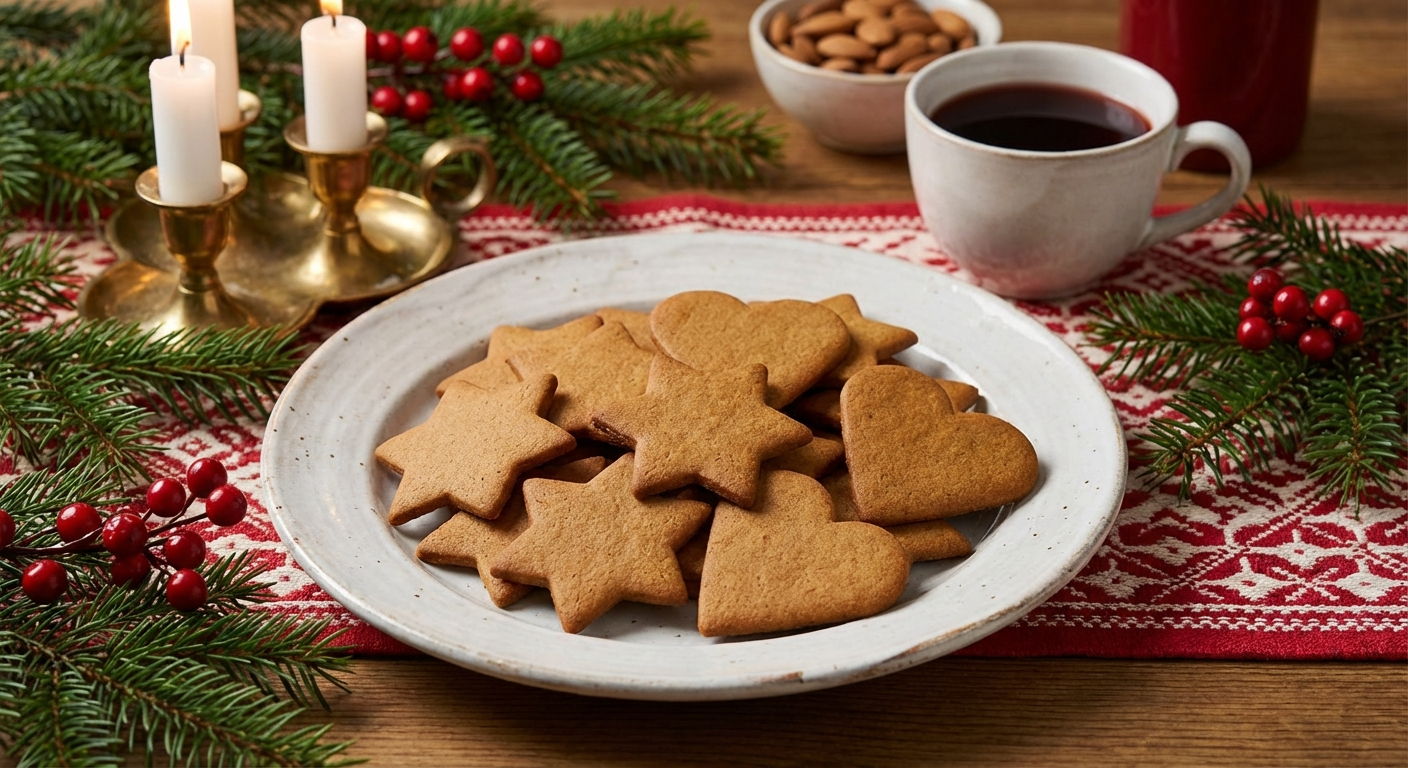
Authentic Swedish pepparkakor — delicate, paper-thin gingerbread cookies spiced with ginger, cinnamon, and cloves. The classic Swedish Christmas cookie, perfect for decorating or eating plain.
Ingredients
Swedish pepparkakor are delicate, crispy gingerbread cookies rolled paper-thin and baked until they snap when you bite them. They're a Christmas staple in Sweden — every family makes them during Advent, and no holiday coffee table (fika) is complete without them.
What Are Pepparkakor?
Pepparkakor (pronounced PEP-par-kah-kor) literally means "pepper cookies" in Swedish, though they're actually spiced with ginger, cinnamon, and cloves — no pepper at all. The name comes from an old Swedish word for ginger.
What sets pepparkakor apart from other gingerbread cookies is their extreme thinness. Swedish bakers roll them almost translucent, creating a delicate cookie that shatters into a cloud of spice when you bite it. They're often cut into traditional shapes like hearts, stars, and pigs (the pig is a traditional Swedish Christmas symbol).
The Swedish Christmas Tradition
In Sweden, pepparkakor appear everywhere during Christmas season — at holiday markets, advent coffee gatherings (glögg and pepparkakor is the classic pairing), and on Christmas Eve buffets. There's even a playful tradition: place a pepparkakor in the palm of your hand and tap it with one finger. If it breaks into exactly three pieces, you get to make a wish.
Ingredients
- 1 cup (2 sticks / 225g) unsalted butter
- 1½ cups (300g) granulated sugar
- ⅓ cup (80ml) dark corn syrup or golden syrup
- 1 tbsp ground ginger
- 1 tbsp ground cinnamon
- 1½ tsp ground cloves
- 2 tsp baking soda
- ⅓ cup (80ml) water
- 3½ cups (440g) all-purpose flour — plus more for rolling
Step-by-Step Instructions
Step 1: Make the Dough
In a medium saucepan over medium heat, combine the butter, sugar, and corn syrup. Stir frequently until the butter is melted and the sugar is dissolved. Remove from heat.
Add the ginger, cinnamon, and cloves. Stir to combine. Let the mixture cool for 5 minutes.
Step 2: Add Baking Soda and Water
In a small bowl, dissolve the baking soda in the water. Add this to the spiced butter mixture and stir well — it will foam up slightly.
Step 3: Add Flour
Gradually stir in the flour, 1 cup at a time, until a soft dough forms. The dough will be quite soft and sticky at this point — that's normal.
Step 4: Chill the Dough
Divide the dough into 3-4 portions, flatten each into a disk, and wrap in plastic wrap. Refrigerate for at least 2 hours, or overnight. The dough MUST be well-chilled to roll thin — don't skip this step.
Step 5: Preheat and Prepare
Preheat your oven to 375°F (190°C). Line baking sheets with parchment paper or silicone mats.
Step 6: Roll Paper-Thin
Working with one portion of dough at a time (keep the rest refrigerated), roll it out on a lightly floured surface. This is where pepparkakor get their magic: roll as thin as you possibly can — about 1/16 inch thick, almost translucent. You should be able to see the countertop through the dough.
If the dough becomes too soft to work with, return it to the refrigerator for 10-15 minutes.
Step 7: Cut Shapes
Use cookie cutters to cut shapes — traditional Swedish shapes include hearts, stars, pigs, and gingerbread people. Place cookies on the prepared baking sheets about 1 inch apart (they don't spread much).
Step 8: Bake
Bake for 5-8 minutes, depending on thickness. The cookies should be golden brown around the edges and slightly darker in the center. They'll still be soft when you take them out but will crisp up as they cool.
Let cool on the baking sheet for 2-3 minutes, then transfer to a wire rack to cool completely.
Pro Tips for Perfect Pepparkakor
- Roll THIN — This is the secret. The thinner, the better. Pepparkakor should snap, not bend.
- Chill thoroughly — Warm dough is impossible to roll thin. If it gets sticky while rolling, chill it again.
- Watch the oven — These bake fast! Check at 5 minutes. Thin cookies burn quickly.
- Use parchment paper — Makes cleanup easier and prevents sticking.
- Re-roll scraps — Gather scraps, re-chill if needed, and roll again. You'll get dozens of cookies from this dough.
- Even thickness — Try to roll evenly so all cookies bake at the same rate.
- Cool completely — Cookies crisp up as they cool. Don't judge crispness fresh from the oven.
Decorating Pepparkakor
While many Swedes enjoy pepparkakor plain (the spice flavor is the star), they're also beautiful decorated:
- Royal icing — Pipe simple white designs for a classic look
- Pearl sugar — Press Swedish pearl sugar into the dough before baking for sparkle
- Chocolate drizzle — Melt dark chocolate and drizzle over cooled cookies
- Edible gold dust — Brush on for an elegant finish
For more decorated cookie ideas, see our Christmas cookie decorating guide.
Serving Suggestions
Pepparkakor are traditionally served:
- With coffee or tea during afternoon fika
- Alongside glögg (Swedish mulled wine) — see our holiday drink recipes
- On a Christmas cookie platter with other holiday cookies
- As part of a Scandinavian Christmas spread with other international recipes
- Packaged in tins as gifts — they ship beautifully and keep well
Storage and Make-Ahead
Baked cookies: Store in an airtight container at room temperature for up to 3 weeks. They actually improve with a day or two of storage as the spices mellow.
Dough: Can be refrigerated for up to 1 week or frozen for up to 3 months. Thaw overnight in the refrigerator before rolling.
Freezing baked cookies: Freeze in airtight containers for up to 3 months. Thaw at room temperature.
Why Are They Called Pepper Cookies?
The name "pepparkakor" comes from the medieval Swedish word "peppar," which originally meant any exotic spice — not just black pepper. Ginger, cinnamon, and cloves were once rare and expensive imports, grouped together as "peppar." So "pepparkakor" really means "spice cookies," though the name stuck even as the meaning changed.
Related Christmas Recipes
- Christmas Cookie Recipes — More holiday baking ideas
- German Christmas Stollen — Another European tradition
- British Christmas Pudding — International holiday dessert
- Christmas Desserts — Festive sweet treats
- Holiday Drinks — Glögg and other festive beverages
Frequently Asked Questions
Can I use regular molasses instead of corn syrup?
You can, but it will change the flavor significantly. Molasses is much stronger and more bitter than corn syrup. For a closer substitute, use golden syrup (like Lyle's) or light corn syrup. Dark molasses will make them taste more like American gingerbread.
My cookies are chewy, not crispy. What went wrong?
Either they weren't rolled thin enough, or they were underbaked. Pepparkakor must be rolled paper-thin (1/16 inch or thinner) and baked until golden brown. They'll seem soft when you take them out but will crisp as they cool. If they're still chewy after cooling completely, bake the next batch 1-2 minutes longer.
How far ahead can I make these?
Pepparkakor actually benefit from aging — the spices mellow and the flavor deepens. Make them up to 3 weeks ahead and store in an airtight container. Many Swedish families bake them at the start of December for Christmas Eve.
Can I adjust the spices?
Absolutely! Some families like more ginger, others prefer extra cinnamon. Start with this ratio and adjust to your taste next time. Some recipes add cardamom (very Scandinavian) or a pinch of white pepper for complexity.
What's the best way to roll them so thin?
Work with very cold dough, use plenty of flour on your rolling surface and pin, and roll from the center outward. A marble rolling pin or pastry cloth can help. If the dough resists or tears, chill it again for 15 minutes. Patience is key!
These delicate Swedish gingerbread cookies are a Christmas classic for good reason. The scent of warm spices, the satisfying snap when you bite in, and the tradition of making them together — that's what Swedish Christmas tastes like.
Get Christmas recipes in your inbox
New holiday recipes every week during the Christmas season.