Christmas Main Courses Recipes
Roast turkey, ham, prime rib, and show-stopping Christmas dinner mains.
<p class="mb-4">The Christmas main course is the centerpiece of your holiday table — the dish everyone gathers around and remembers for years to come. Whether your family tradition calls for a golden roast turkey, a honey-glazed ham, a magnificent prime rib, or something entirely different, we have recipes to help you nail it. These are the show-stopping mains that make Christmas dinner truly special.</p><p class="mb-4">Getting the main course right is about more than just following a recipe. It's about timing, temperature control, and understanding how different proteins behave in the oven. A perfectly roasted turkey with crispy golden skin and juicy meat, a spiral ham with a sticky-sweet glaze that caramelizes to perfection, or a prime rib roast with a beautifully seared crust and rosy center — these are the dishes that create lasting holiday memories.</p><h2 class="text-2xl font-bold text-red-800 mt-8 mb-4">Classic Christmas Main Courses</h2><p class="mb-4">Different families have different traditions, but a few main courses dominate American Christmas tables:</p><ul class="list-disc pl-6 mb-4 space-y-2"><li><strong>Roast Turkey</strong> — The classic choice for many families, offering both white and dark meat to satisfy everyone. A 12-15 pound bird serves 8-10 people comfortably with leftovers for sandwiches.</li><li><strong>Glazed Ham</strong> — Often easier than turkey since most hams come pre-cooked and just need glazing and reheating. Perfect for hosts who want impressive results with less stress.</li><li><strong>Prime Rib</strong> — The luxury option for special occasions. Expensive but absolutely worth it for the tender, flavorful meat that makes guests feel truly celebrated.</li><li><strong>Roast Goose or Duck</strong> — Traditional in many European families, offering richer, darker meat with crispy skin when prepared correctly.</li><li><strong>Beef Tenderloin</strong> — Elegant and surprisingly simple to prepare. Roasts quickly at high heat and serves beautifully sliced with horseradish cream.</li></ul><p class="mb-4">Choose based on your guest count, budget, and cooking confidence. There is no wrong answer — the best main course is the one your family looks forward to year after year.</p><h2 class="text-2xl font-bold text-red-800 mt-8 mb-4">Choosing the Right Main for Your Crowd</h2><p class="mb-4">The size of your gathering determines which main course makes the most sense. For 4-6 people, a small turkey breast, beef tenderloin, or bone-in leg of lamb works beautifully without overwhelming your oven or leaving you with a week of leftovers. For 8-12 guests, a whole turkey or a bone-in ham provides the right amount of food with some planned leftovers. Crowds of 15+ might call for two smaller turkeys instead of one massive bird — they cook more evenly and give you insurance if something goes wrong.</p><p class="mb-4">Consider your guests' preferences and dietary restrictions. If you have several non-red-meat eaters, turkey or a beautiful roasted salmon might be better than prime rib. If you have picky eaters or children who prefer milder flavors, ham or turkey breast offers familiar, crowd-pleasing options. Always have a backup plan — even experienced cooks occasionally encounter a turkey that takes longer than expected or a roast that cooks faster than planned.</p><h2 class="text-2xl font-bold text-red-800 mt-8 mb-4">Timing Your Christmas Main Course</h2><p class="mb-4">The biggest challenge with holiday mains is coordinating everything to finish at the same time. Work backward from your desired dinner time:</p><ul class="list-disc pl-6 mb-4 space-y-2"><li><strong>Turkey (12-15 lbs)</strong> — 3.5-4 hours roasting + 30 minutes resting = start 4-4.5 hours before dinner</li><li><strong>Prime rib (5-6 lbs)</strong> — 2-2.5 hours roasting + 20 minutes resting = start 2.5-3 hours before dinner</li><li><strong>Glazed ham (8-10 lbs, pre-cooked)</strong> — 2 hours warming and glazing = start 2.5 hours before dinner</li><li><strong>Beef tenderloin</strong> — 45-60 minutes roasting + 15 minutes resting = start 1.5 hours before dinner</li></ul><p class="mb-4">Use that resting time wisely — while your main rests under foil, you can finish <a href="/christmas-recipes/side-dishes/" class="text-red-700 hover:underline">side dishes</a>, make gravy, reheat anything that needs it, and get everything plated. Never skip the resting period — cutting into meat immediately causes all the juices to run out onto the cutting board instead of staying in the meat where they belong.</p><h2 class="text-2xl font-bold text-red-800 mt-8 mb-4">Making Perfect Pan Gravy</h2><p class="mb-4">The secret to restaurant-quality gravy is using those flavorful pan drippings from your roast. After removing your turkey, ham, or roast from the pan, pour the drippings into a fat separator or measuring cup. Let the fat rise to the top, then skim off about 1/4 cup of fat and return it to the roasting pan. Place the pan over medium heat on the stovetop, add 1/4 cup flour, and whisk constantly for 2-3 minutes to create a roux. Slowly add 3-4 cups of the defatted drippings (or a combination of drippings and chicken or beef stock), whisking constantly to prevent lumps. Simmer for 5-10 minutes until thickened, season with salt and pepper, and strain if you want a perfectly smooth gravy.</p><p class="mb-4">Make-ahead tip: You can make gravy from store-bought stock a day ahead and reheat it while your main rests. Simply brown some turkey or chicken parts in your roasting pan, deglaze with stock, and proceed with the roux method above. This removes time pressure from the final minutes before serving.</p><h2 class="text-2xl font-bold text-red-800 mt-8 mb-4">Carving and Presentation</h2><p class="mb-4">A beautifully carved roast elevates your entire presentation. For turkey, remove the legs and thighs first, then slice the breast meat against the grain in even slices. For prime rib, use a sharp carving knife to cut between the bones, then slice the boneless roast into 1/2-inch thick slices. Ham is easiest — simply carve thin slices parallel to the bone, working your way around.</p><p class="mb-4">Presentation matters. Arrange sliced meat on a warm platter garnished with fresh herbs like rosemary, thyme, or sage. Tuck roasted lemon halves or orange slices around the edges for color. Serve gravy in a proper gravy boat with a ladle. These small touches make the meal feel special and show respect for the effort you put into cooking.</p><h2 class="text-2xl font-bold text-red-800 mt-8 mb-4">Pairing Mains with Sides and Drinks</h2><p class="mb-4">Your main course should guide your side dish choices. Turkey pairs beautifully with <a href="/christmas-recipes/side-dishes/" class="text-red-700 hover:underline">traditional sides</a> like mashed potatoes, stuffing, cranberry sauce, and green bean casserole. Prime rib calls for Yorkshire pudding, creamy horseradish sauce, and roasted root vegetables. Ham works wonderfully with sweet sides like candied yams, pineapple, and brown sugar-glazed carrots.</p><p class="mb-4">For beverages, consider what complements your protein. Turkey and ham pair well with medium-bodied white wines like Chardonnay or light reds like Pinot Noir. Prime rib demands a full-bodied red like Cabernet Sauvignon or Merlot. Don't forget non-alcoholic options — sparkling cider, cranberry spritzers, and festive <a href="/christmas-recipes/drinks/" class="text-red-700 hover:underline">holiday mocktails</a> ensure every guest has something special to drink.</p><h2 class="text-2xl font-bold text-red-800 mt-8 mb-4">From Main Course to Complete Feast</h2><p class="mb-4">Once you've mastered your signature Christmas main, the rest of the meal falls into place. Start the meal with elegant <a href="/christmas-recipes/appetizers/" class="text-red-700 hover:underline">Christmas appetizers</a> to keep guests happy while the main finishes cooking. Round out the table with our collection of <a href="/christmas-recipes/side-dishes/" class="text-red-700 hover:underline">holiday side dishes</a> that complement any main course. Finish strong with a selection from our <a href="/christmas-recipes/desserts/" class="text-red-700 hover:underline">Christmas dessert recipes</a> — because every great feast deserves a sweet ending.</p>
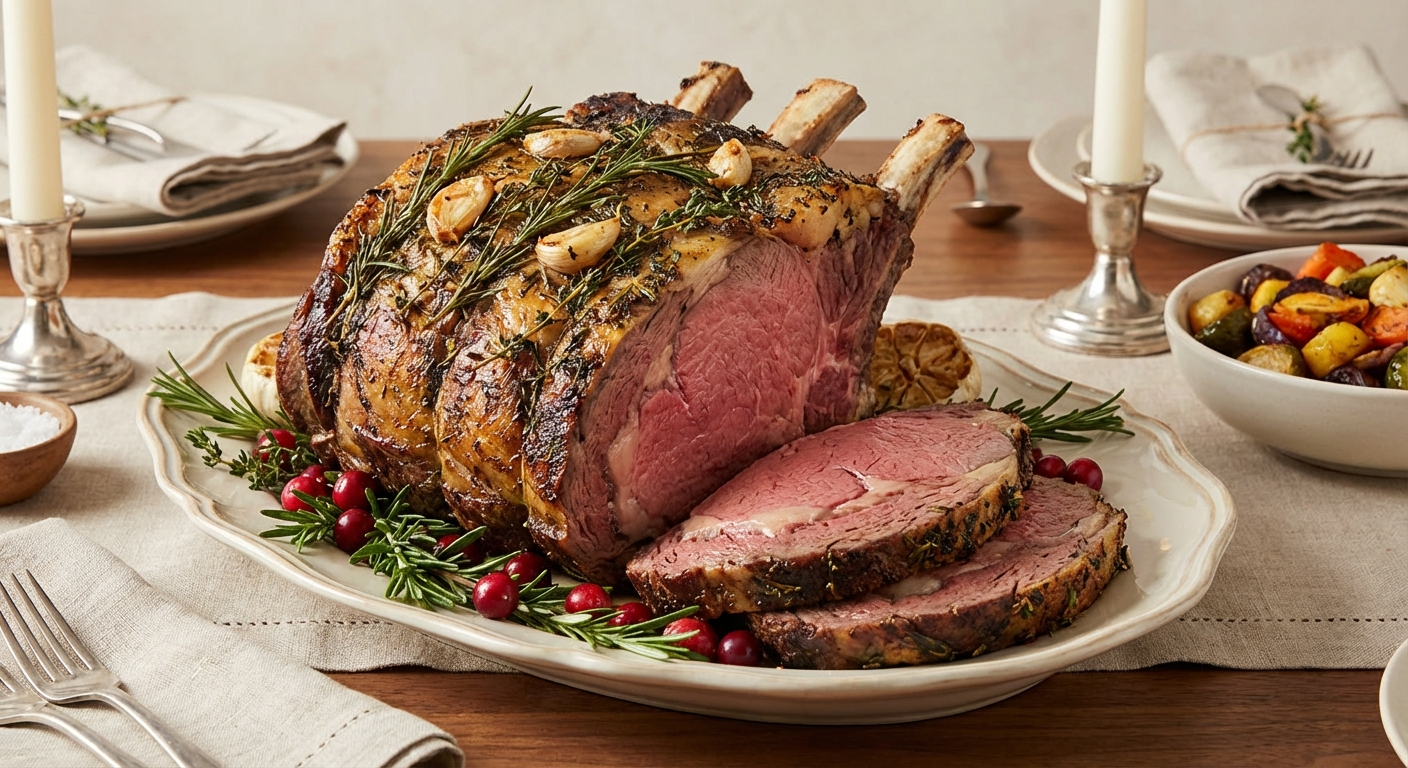
Herb-Crusted Prime Rib
An impressive, restaurant-quality prime rib roast encrusted with a fragrant blend of fresh herbs, garlic, and Dijon mustard. Seared to develop a gorgeous crust, then slow-roasted to a perfect medium-rare. This is the ultimate Christmas dinner centerpiece for special occasions.
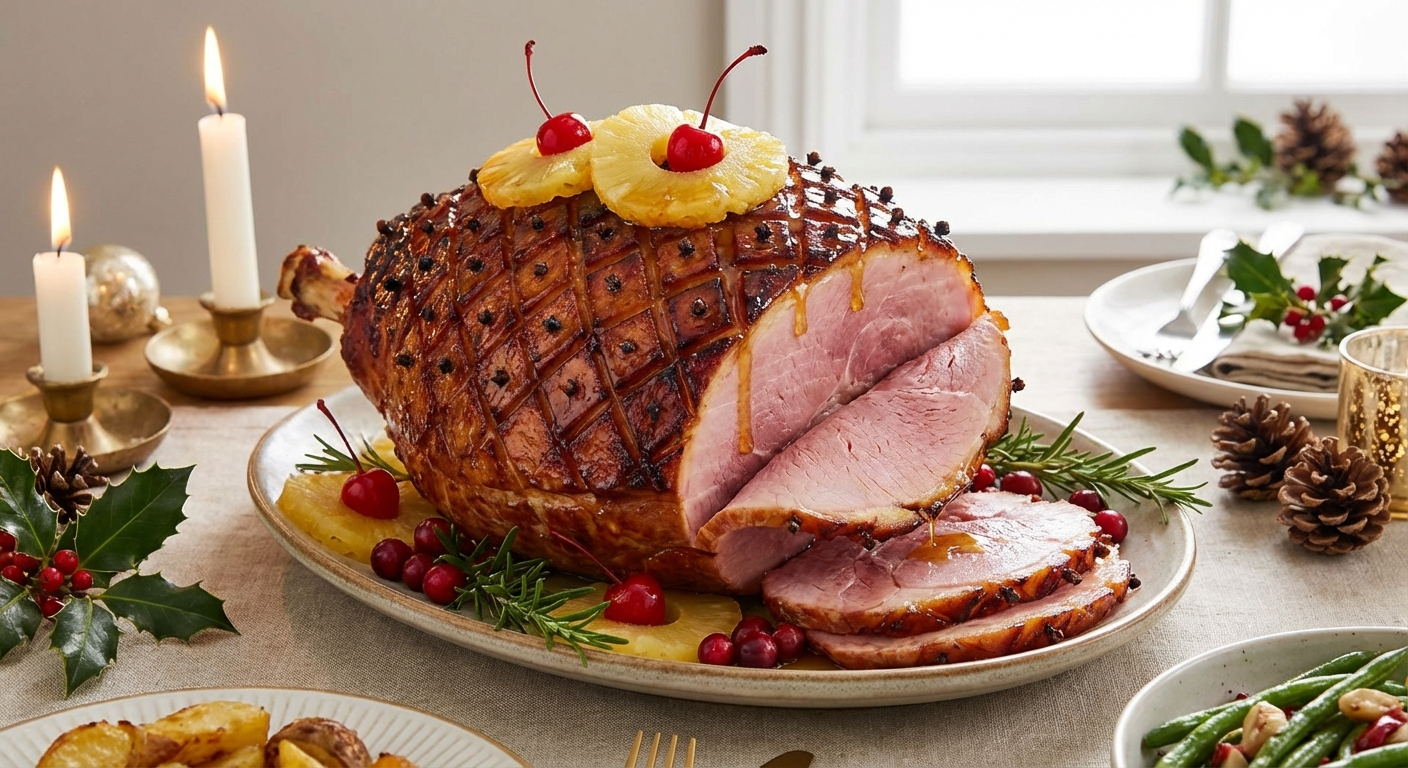
Honey Glazed Christmas Ham
A showstopping holiday centerpiece featuring a bone-in ham coated in a luscious glaze of honey, brown sugar, Dijon mustard, and warm spices. Scored in a diamond pattern and studded with whole cloves, this ham is as beautiful as it is delicious.
💡 Pro Tips for Main Courses
- ✓ Take your meat out of the refrigerator 1-2 hours before cooking to bring it to room temperature for more even cooking.
- ✓ Invest in a good instant-read thermometer — it's the only way to know when your roast is perfectly done.
- ✓ Let roasted meats rest for 15-20 minutes before carving to allow juices to redistribute.
- ✓ Save the pan drippings! They make the best gravy and shouldn't go to waste.
- ✓ Dry the skin thoroughly before roasting turkey or duck — moisture is the enemy of crispy skin.
- ✓ Use a roasting rack to elevate your meat above the pan for even heat circulation and better browning.
- ✓ Tent loosely with foil if the top is browning too quickly — don't wrap tightly or you'll steam the meat.
- ✓ Season generously — large roasts need more salt than you think to be properly seasoned throughout.
- ✓ Baste sparingly — opening the oven repeatedly drops the temperature and extends cooking time.
- ✓ Make gravy while the meat rests — this is the perfect use of that 15-20 minute window.
- ✓ Carve against the grain for maximum tenderness — look at the direction of the muscle fibers and slice perpendicular.
- ✓ Keep a backup instant stuffing mix or extra ham in the freezer in case of cooking emergencies.
Never miss a Christmas idea
Get daily gift guides, recipes, and holiday inspiration delivered to your inbox.