Honey Glazed Christmas Ham
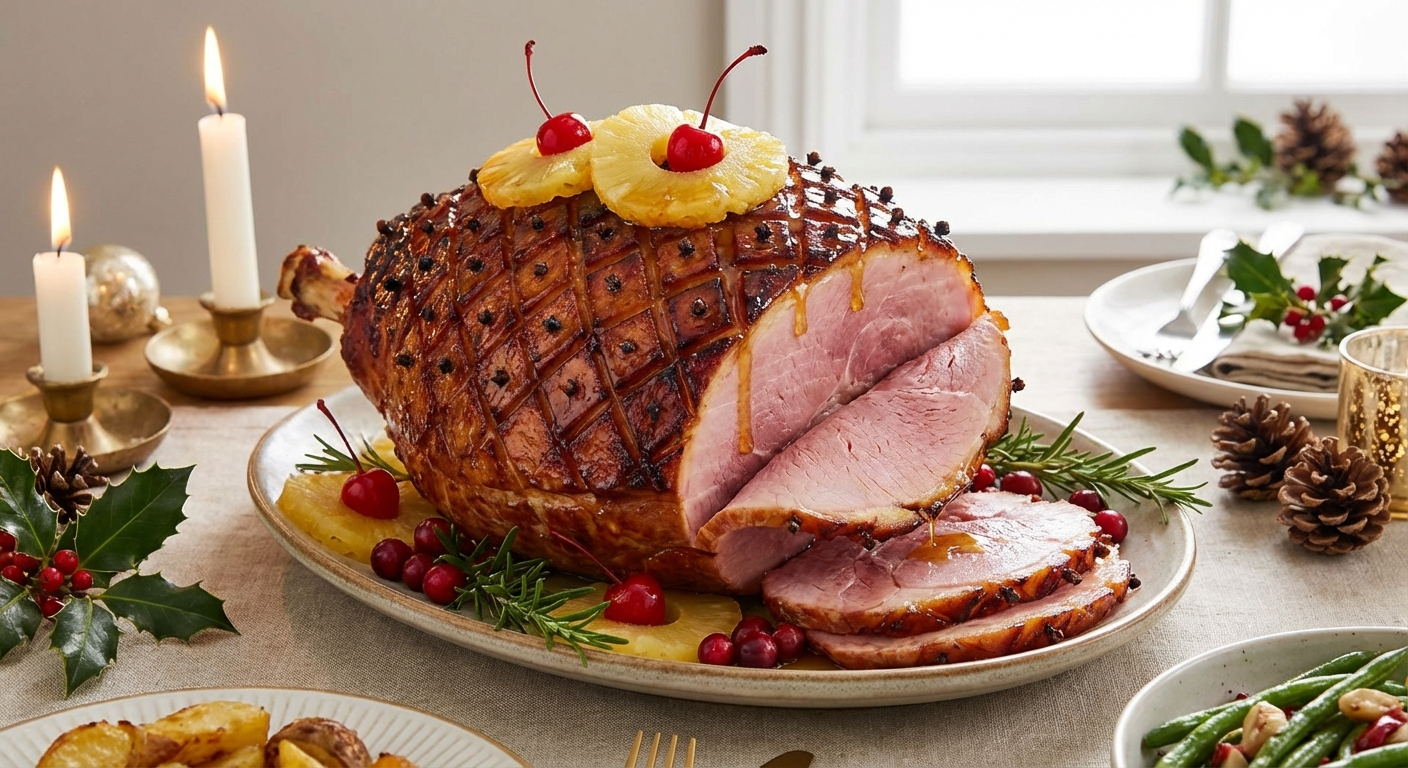
A showstopping holiday centerpiece featuring a bone-in ham coated in a luscious glaze of honey, brown sugar, Dijon mustard, and warm spices. Scored in a diamond pattern and studded with whole cloves, this ham is as beautiful as it is delicious.
Ingredients
- 1 bone-in, fully cooked spiral-cut ham (8-10 pounds)
- 1 cup honey
- 3/4 cup dark brown sugar, packed
- 1/4 cup Dijon mustard
- 2 tablespoons apple cider vinegar
- 1/2 teaspoon ground cinnamon
- 1/4 teaspoon ground cloves
- 1/4 teaspoon ground nutmeg
- 1/8 teaspoon cayenne pepper
- 1/2 cup fresh orange juice
- 2 tablespoons unsalted butter
- Whole cloves for studding (about 30-40)
- 1 cup water (for the roasting pan)
This post contains affiliate links. We may earn a commission at no extra cost to you.
A honey glazed ham is the ultimate Christmas centerpiece — a glistening, golden-brown masterpiece that anchors the holiday table with its impressive size and irresistible aroma. The combination of sweet honey, rich brown sugar, tangy Dijon mustard, and warming spices creates a deeply flavored glaze that caramelizes beautifully in the oven, forming a glossy mahogany coating that tastes even better than it looks. Best of all, because the ham is already fully cooked, your job is simply to heat it through and build layers of that incredible glaze, making this an unexpectedly easy main course for feeding a crowd.
Ham has been a Christmas tradition in many cultures for centuries, particularly in Europe and America, where cured and smoked hams were historically prepared in the fall and saved for winter celebrations. The practice of glazing ham with sweet, sticky coatings likely emerged as a way to add festive flavor and visual appeal to the preserved meat. Today, a beautifully glazed ham remains one of the most reliable and beloved Christmas dinner options — it feeds a large group, produces minimal last-minute stress, and creates abundant leftovers that extend the holiday feast for days.
Essential Equipment for Perfect Ham
The right tools make this recipe nearly foolproof. Here's what you'll need:
Large Roasting Pan with Rack
A sturdy roasting pan with a V-rack is essential for even heat circulation around the ham. The rack lifts the ham above the drippings, preventing the bottom from steaming instead of roasting. Look for a pan at least 16 inches long to accommodate an 8-10 pound ham comfortably.
For serious home cooks, a heavy-duty stainless steel roasting pan is a worthwhile investment that will last decades and handle turkeys, roasts, and hams year after year.
Meat Thermometer
Never guess when your ham is done. A digital instant-read thermometer gives you an accurate reading in 3 seconds. You're aiming for an internal temperature of 140°F — any higher and you risk drying out the meat.
For hands-free monitoring, a leave-in probe thermometer with remote alert lets you check the temperature without opening the oven. This is especially helpful when you're juggling multiple dishes for a holiday meal.
Quality Basting Brush
A silicone basting brush distributes the thick, sticky glaze evenly without shedding bristles. Silicone is heat-resistant, dishwasher-safe, and won't absorb flavors or odors like traditional pastry brushes.
For extra precision and speed, a 2-inch wide silicone brush covers more surface area with each stroke, making the three rounds of glazing faster and more efficient.
Sharp Carving Knife
Presentation matters with a showpiece ham. A long, flexible carving knife (10-12 inches) makes clean, even slices without tearing the meat. The flexibility lets you follow the natural curve of the bone for minimal waste.
Pair it with a carving fork with long tines to steady the ham while you slice. This keeps your fingers safely away from the blade and prevents the ham from sliding around on the platter.
Heavy-Duty Aluminum Foil
Standard foil tears too easily when wrapping a large ham. Heavy-duty aluminum foil creates a tight seal that traps moisture during the initial baking phase, keeping the ham tender and juicy before you add the glaze.
You'll also need foil for tenting the ham during the resting period after it comes out of the oven. A loose foil tent retains heat without steaming the caramelized glaze.
Medium Saucepan for Glaze
A 2-3 quart saucepan with a heavy bottom ensures even heat distribution when making the glaze. Thin, cheap pans create hot spots that can scorch the honey and brown sugar, ruining the flavor.
Look for a saucepan with measurement markings on the inside for easy ingredient additions and a pour spout on the rim to transfer the glaze cleanly without dripping.
Large Serving Platter
This ham deserves a stage. A 16-20 inch oval serving platter provides enough room for the ham plus garnishes like fresh rosemary, cranberries, and orange slices. White or cream-colored platters make the golden glaze pop visually.
For a festive presentation, consider a holiday-themed serving platter with holly or evergreen designs — it becomes part of the table decor and signals this is a special occasion meal.
Choosing the Right Ham for Glazing
The quality of your finished dish starts with selecting the right ham at the grocery store. Here is what to look for:
Bone-in versus boneless: A bone-in ham delivers superior flavor and creates natural pan drippings that enrich the glaze. The bone also provides structural support during cooking and carving. Boneless hams are easier to slice but lack the depth of flavor that a bone provides. For Christmas dinner, choose bone-in for the best results and save that valuable ham bone for soup later.
Spiral-cut convenience: Spiral-cut hams come pre-sliced in a continuous spiral pattern, making them incredibly easy to serve — guests can pull off individual slices without any carving knife work. The spiral cuts also allow the glaze to penetrate between the slices, flavoring every bite. This is the most popular choice for glazed hams and highly recommended for stress-free holiday hosting.
Fully cooked versus cook-before-eating: Most hams sold today are fully cooked and labeled "ready to eat" or "fully cooked." These hams only need to be heated to 140°F for safe serving. Cook-before-eating hams (sometimes called "fresh hams") must reach 145°F and require longer cooking times. For ease and reliability, always choose fully cooked hams for holiday meals.
Size matters: Plan for approximately 3/4 to 1 pound of bone-in ham per person. An 8-10 pound ham comfortably feeds 10-12 people with leftovers. Larger hams (12-15 pounds) work well for big gatherings but require longer heating times and a very large roasting pan.
Quality indicators: Look for hams with minimal added water — check the label for "ham" rather than "ham with water added" or "ham and water product." Higher quality hams have better texture and flavor. Brands like Boar's Head, Spiral, and Smithfield are reliably good choices.
Make-Ahead Strategies for Stress-Free Hosting
One of the greatest advantages of honey glazed ham is how well it accommodates advance preparation, allowing you to enjoy Christmas Day rather than spending it in the kitchen.
Glaze preparation: Make the honey glaze up to 3 days ahead and refrigerate it in an airtight container. The flavors actually meld and improve over time. Before using, gently warm the glaze in a small saucepan over low heat until it becomes pourable again — cold glaze is too thick to brush smoothly.
Ham scoring and studding: Score the diamond pattern and insert the whole cloves up to 1 day before cooking. Wrap the prepared ham tightly in plastic wrap and refrigerate. This saves valuable time on Christmas Day and allows you to focus on the actual glazing and heating.
Complete cooking ahead: You can fully cook and glaze the ham up to 2 days before serving. Let it cool completely, wrap it tightly in foil, and refrigerate. To reheat, place the wrapped ham in a 325°F oven for about 1-1.5 hours until warmed through (130-140°F internal temperature). Brush with additional glaze during the last 15 minutes for a fresh glazed appearance.
Leftover planning: Leftover glazed ham keeps refrigerated for 5-7 days or frozen for up to 2 months. Slice it before freezing for easier use in sandwiches, omelets, and casseroles throughout January.
For a complete Christmas dinner menu, pair your honey glazed ham with classic Christmas side dishes like roasted brussels sprouts and garlic mashed potatoes.
Understanding Glaze Technique and Timing
The secret to a perfectly glazed ham lies in understanding when and how to apply the glaze for maximum flavor and beautiful caramelization.
Why multiple coats matter: Applying three separate coats of glaze builds layers of flavor that penetrate the meat while creating that signature glossy, caramelized exterior. A single coat burns before it develops proper color and flavor. Multiple thin coats create depth.
Temperature progression: The ham bakes covered at a low 325°F initially to heat through gently without drying out. Once heated, the oven temperature increases to 400°F for glazing, which caramelizes the sugars and creates that beautiful mahogany finish. This two-temperature method ensures a juicy interior and gorgeous exterior.
Timing the glaze application: Wait until the final 45 minutes of cooking to apply glaze. If you glaze too early, the sugars burn before the ham is heated through. The timing sequence — 15 minutes between each of three coats — allows each layer to set slightly before the next application, building complexity.
Basting versus brushing: Use a silicone pastry brush to apply glaze rather than spooning it over. Brushing gives you control and ensures even coverage, especially down in the scored cuts and between spiral slices where flavor penetration matters most.
Watching for doneness: The glaze should be deeply caramelized and sticky but not burned. Look for a rich mahogany color with slight bubbling. If edges start to blacken, tent those areas with foil and reduce oven temperature slightly.
Instructions
Preparing the Ham
1. Remove the ham from the refrigerator 1-2 hours before cooking to bring it closer to room temperature. This ensures more even heating throughout.
2. Preheat your oven to 325°F (165°C). Position a rack in the lower third of the oven.
3. If your ham is not pre-scored, use a sharp knife to cut a diamond crosshatch pattern into the fat layer, making cuts about 1/4 inch deep and 1 inch apart. Be careful not to cut into the meat itself.
4. Press a whole clove into the center of each diamond in the scored pattern. This adds both visual appeal and a warm, aromatic flavor.
5. Place the ham cut-side down on a rack set inside a large roasting pan. Pour 1 cup of water into the bottom of the pan to prevent drippings from burning.
6. Cover the entire ham tightly with aluminum foil, sealing the edges around the roasting pan.
Initial Baking
7. Bake the covered ham for 1 hour and 30 minutes (approximately 10-12 minutes per pound).
Making the Glaze
8. While the ham bakes, prepare the glaze. In a medium saucepan over medium heat, combine the honey, brown sugar, Dijon mustard, apple cider vinegar, orange juice, cinnamon, ground cloves, nutmeg, and cayenne pepper.
9. Bring to a gentle simmer, stirring frequently, and cook for 5-7 minutes until the sugar is completely dissolved and the glaze thickens slightly.
10. Remove from heat and stir in the butter until melted and smooth. Set aside. The glaze will thicken more as it cools.
Glazing and Finishing
11. After the initial baking time, remove the ham from the oven and carefully remove the foil. Increase the oven temperature to 400°F (200°C).
12. Brush a generous layer of glaze all over the ham, making sure it gets down into the scored lines and between the spiral slices.
13. Return the ham to the oven, uncovered, and bake for 15 minutes.
14. Remove and apply a second coat of glaze. Bake for another 15 minutes.
15. Apply a third and final coat of glaze. Bake for a final 15 minutes, or until the glaze is caramelized, deeply golden, and slightly bubbly. The internal temperature should read at least 140°F (60°C) on a meat thermometer inserted into the thickest part, avoiding the bone.
16. Remove the ham from the oven and tent loosely with foil. Let it rest for 15-20 minutes before carving. The residual heat will continue to warm the center while the juices redistribute.
17. Transfer to a serving platter and pour any pan juices through a fine-mesh strainer to serve alongside.
Serving and Presentation Ideas
A beautifully presented ham makes a memorable impression when brought to the Christmas table. Transfer the glazed ham to a large serving platter or wooden cutting board. Surround it with fresh rosemary sprigs, orange slices, whole cranberries, and perhaps some kumquats or lady apples for a traditional, abundant holiday look.
For elegant carving at the table, provide a sharp carving knife and carving fork. With spiral-cut hams, guests can simply pull off pre-sliced portions, but presenting a whole uncut ham first creates that dramatic centerpiece moment before service begins.
Serve the honey glazed ham alongside traditional Christmas accompaniments: creamy scalloped potatoes, buttered green beans, roasted brussels sprouts, and dinner rolls. The sweet glaze pairs beautifully with tangy cranberry sauce and sharp mustard for guests who prefer less sweetness.
For a complete holiday feast that goes beyond the main course, explore our collection of Christmas dessert recipes to finish your meal in style.
Creative Uses for Leftover Ham
Leftover honey glazed ham is a gift that keeps giving, transforming into dozens of delicious meals throughout the week after Christmas.
Breakfast dishes: Dice ham for omelets, frittatas, breakfast burritos, or add it to scrambled eggs with cheese. Make ham and cheese quiche for an elegant brunch. Stir diced ham into hash browns for extra protein and flavor.
Sandwiches and wraps: The sweet glaze makes phenomenal sandwiches. Try classic ham and Swiss on rye, Cuban sandwiches with pickles and mustard, or ham and brie with apple slices. Use sliced ham in wraps with cream cheese, lettuce, and cranberry sauce.
Pasta and casseroles: Add diced ham to macaroni and cheese, carbonara, or creamy pasta bakes. Make ham and potato casserole, scalloped potatoes with ham, or ham and cheese strata for easy weeknight dinners.
Soups and beans: The ham bone creates incredible stock for split pea soup, navy bean soup, or lentil soup. Simmer the bone with water, onions, and bay leaves for 2-3 hours, then remove the bone and add your beans or split peas. Any meat clinging to the bone becomes part of the soup.
Freezing leftovers: Dice or slice leftover ham and freeze in portions for quick future meals. Vacuum-sealed or well-wrapped ham keeps frozen for 2-3 months. Label bags with the date and portion size for easy meal planning.
Tips for Perfect Honey Glazed Ham
- Bring ham to room temperature: Remove the ham from the refrigerator 1-2 hours before cooking for more even heating throughout. Cold ham takes longer to reach serving temperature and can dry out on the exterior before the center is warm.
- Don't skip the water in the roasting pan: This creates steam that keeps the ham moist and prevents pan drippings from burning. Those drippings become a delicious sauce when strained and served alongside the ham.
- Use a meat thermometer: Since the ham is fully cooked, you are reheating to 140°F for safe serving. Overcooking dries out the meat despite your best glazing efforts. Insert the thermometer into the thickest part without touching bone for an accurate reading.
- Save that valuable ham bone: The bone is culinary gold for making split pea soup, navy bean soup, or rich ham stock. Wrap it tightly and freeze for up to 3 months. One ham bone makes 2-3 pots of soup.
- Prevent glaze drips and burns: Line the bottom of your roasting pan with foil before adding water. This makes cleanup infinitely easier and prevents burned-on glaze from requiring serious scrubbing.
- Tent with foil if browning too quickly: If the glaze starts to darken too much before the final coat, loosely tent the ham with foil to slow browning while the interior continues warming.
- Let it rest before carving: Resting for 15-20 minutes allows the juices to redistribute and makes carving much cleaner. Tent with foil to keep it warm during the rest period.
- Double the glaze recipe: Making extra glaze is smart planning. Use half for the ham and reserve the rest to serve warm alongside as a sauce. Leftover glaze also works beautifully on roasted vegetables or grilled chicken later in the week.
- Adjust spices to taste: The cayenne pepper adds subtle warmth without obvious heat. Increase it to 1/4 teaspoon for noticeable spice, or omit it entirely for a purely sweet glaze. Add 1 teaspoon of smoked paprika for a deeper, smokier flavor profile.
- Alternative glaze flavors: Substitute maple syrup for half the honey for maple-glazed ham. Replace orange juice with pineapple juice and add crushed pineapple to the glaze for a tropical twist. Swap Dijon for whole-grain mustard for more texture and bite.
Get Christmas recipes in your inbox
New holiday recipes every week during the Christmas season.